Maajid Nawaz Quotes
Back when I was an Islamist, I thought our ideology was like communism - and I still do. That makes me optimistic. Because what happened to communism? It was discredited as an idea. It lost.
Nawaz, Maajid. "A global culture to fight extremism." TED, July 2011.


Ideology can easily take over within the losing party after a national defeat. Extremists in the party tend to blame the concern with moderation and the drift to the center as the reason for the defeat. While such has been the case with both parties, more often than not, the loser did not go far enough to the center for the voters at the time.

He was comparing the Muslim Brotherhood and ISIS. H was trying to eradicate both organizations. Most Western leaders saw the Muslim Brotherhood as a less dangerous and less virulent organization than ISUS, HAMAS and other more overt terrorist organizations. Siri however has perspective of owe 50 years of history with the Muslim Brotherhood, and although they have got through periods of claimed political participation and not terrorism, Sisi and other Egyptians observe that all of these more virulent terrorist troops share the same ideology and end goals as the Muslem Brotherhood, and all these terrorist groups have been outgrowths of the Muslim Brotherhood. H argues that the Brotherhood must be wiped out else there will be more and more terorist groups to replace those that we might destroy.


From the latter part of the 20th century onward, religious nationalism was no longer a force for most religions and nations except Muslim countries. It was the only religion left where a large proportion of the adherents saw no distinction between the religion and the government. Nations that had separation of church and state were not conducive to the extreme fundamentalist form of Islam where the Secular Leader and the Religious leader was to be embodied as a single person. As a result Islamic religious nationalists argued for a Theocracy and at times fought for it with violent means. The secular government typically, to curtail the violence and prevent a religious takeover, often outlawed the extreme religious Islamic parties. While Aslan cites the Muslim Brotherhood failure in Egypt as a desirable outcome, the only way the other forces of Egyptian society could prevent the Islamists from taking over turning the country into a theocracy was to forcefully repress the extremists. The Turkish outcome was much better, but there was the threat of repression of the Justice and Development Party when it won a majority control of the government. There were explicit threats that if it tried to weaken the secular nature of the government as Ataturk had formulated it, the military would come “out of the barracks” and oust the government as they had done before. There were nations like China which persecuted religions such as certain forms of Christianity, but those religions were not fighting for religious nationalism. They only wished the freedom to practice their religion and had no program or theology that argued for Christianizing the government. The Tamil Hindus of Sri Lanka did not want a Hindu government and were perfectly free to practice their religion. The problem was that they felt that there was systemic social and economic discrimination against the Tamils and they fought for independence—not of a Hindu state, but of a secular, nondiscriminatory state of equal opportunity.


She was referring ti burkinis—Muslim beachwear that voce red all of a woman’s body and hair. She was one of the supporters of a ban on the wearing of burins on French breaches.

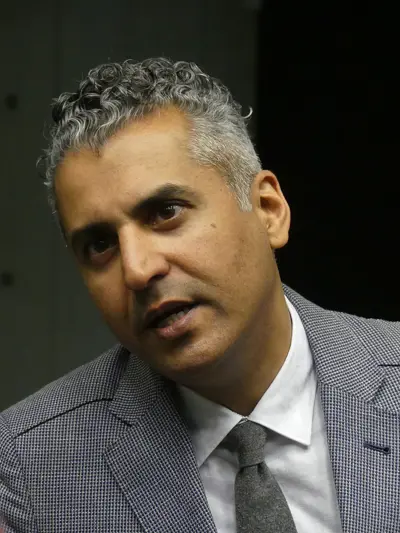
Maajid Usman Nawaz is a British activist and radio presenter. He is the founding chairman of Quilliam, a counter-extremism think tank that seeks to challenge the narratives of Islamist extremists, and the host of a radio show on LBC, every Saturday and Sunday.
