Boris Yeltsin Quotes
Authoritarian leadership and therefore a lack of democracy have led to a certain apathy among the people, to a sort of civil nihilism, a skepticism.
Boris Yeltsin, 1931-2007, Mayor, Moscow (Russia), President, Russian Republic, Politburo member, Interview, Time, March 20, 1989
Sourced by: Eigen's Political and Historical Quotations

With so many revolutionary rulers of new nations suppressing all opposition, the history of Ataturk and Turkey is unique. Ataturk was so popular and his People’s Party so successful that there was no opposition and Turkey had one party rule. However, Ataturk was determined to have Turkey become a parliamentary democracy as good as the Western nations of Europe. So a tradition of multi-party democracy was needed. So Ataturk actually went to his friend Fethi Okyar and asked him to start an opposition party and oppose the government. Fethi was a strong supporter of the revolution and generally was in concurrence with Ataturk and the People’s Party on everything. Ataturk however convinced him that they had to start a tradition that would take Turkey through the future, and he did create a new party-- Serbest Cumhuriyet Fırkası (Liberal Republican Party) and worked hard to find differences with the People’s Party and the Government. One immediate contribution was the oversight that the new party provided—a strong tradition that exists to this day in Turkey.


Essentially, this was the claim of many of the supporters of Fascists who claim liberal values like Mussolini. See {640793} for more of Hayek’s views on dictators.


FDR was a marvelous judge of men and their character. De Gaulle could not separate himself from France and pushed the French Republic towards one man rule (himself) as much as anyone since Napoleon Bonaparte.

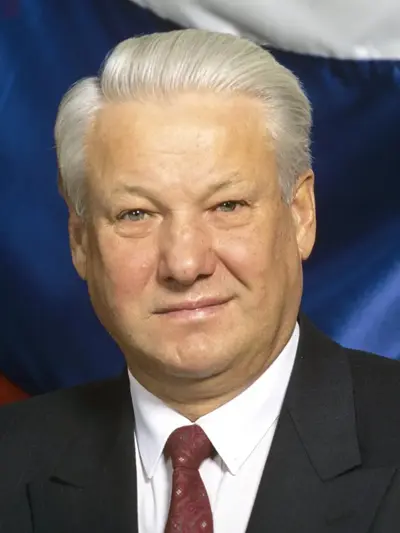
Boris Nikolayevich Yeltsin was a Russian and former Soviet politician who served as the first President of Russia from 1991 to 1999. A member of the Communist Party of the Soviet Union from 1961 to 1990, he later stood as a political independent, during which time he was viewed as being ideologically aligned with conservatism and Russian nationalism.
