Arthur Wellesley, 1st Duke of Wellington Quotes
As Lord Chesterfield said of the generals of his day, 'I only hope that when the enemy reads the list of their names, he trembles as I do.'


The General refused. He had already achieved a strategic victory and it was only a matter of time when the Dutch would withdraw on their own as their supply lines were cut off and the populations wanted them out.


During the Civil War, General Joseph Hooker castigated the President and called for a dictator to assume power:

Referring to Lincoln's Secretary of War, Edwin M. Stanton, who was a forceful administrator constantly telling all others what to do:

Written when he was forced to share command with General Francois Kellerman.

Roosevelt promoted Eisenhower over more than 300 more senior generals and put him in charge of the American Forces invading North Africa—the first American combat in the war. In addition to commanding the American forces, he was also responsible for dealing with many leading politicians from Winston Churchill to the very difficult French General Charles De Gaulle. That is why Eisenhower was picked, and a brilliant pick it was.

General Shafter had a major attack of Gout, a terribly painful disease for which there was little relief at the time. As a result he had little involvement in the battle of Santiago at the most critical period. Crassus was an incompetent general in a famous Roman battle.


We are so accustomed to thinking about George Washington as a great military leader that it is surprising to see contemporary comparisons where Washington was found wanting or second. Actually Horatio Gates was a brilliant tactical general and a great leader of men—many think far better than Washington, but the genius of Washington was his strategic and political grasp of the situation. Essentially, with exceptions like the Battle of Trenton, Washington lost almost all the battles he fought as a tactical general. He realized early on that he did not have to win battles; he just had to prevent losing them so badly that he could not continue the fight. The insurgent wins as long as he can still fight. The British could not win unless they eliminated the ability of the revolutionists to fight. But Washington won the last battle at Yorktown, and that is the one that counted. Rush ran the hospitals for the Revolutionary Army and talked to many officers and enlisted men, and also observed much of the British military practices.

He was objecting to the current crop of senior military officer who have little experience in fighting and much in academic, strategic and technical training. Many however see him as a dinosaur who does not realized the complex nature of the modern military missions. In general, we have won almost all of our fighting battles but often failed in our maintaining civil society, occupation, nation building, military procurement, preventing sexual assault of our own troops by our own soldiers, assuring mental health of our soldiers. Hackworth, detractors argue, wants to change what already works and ignore what does not.


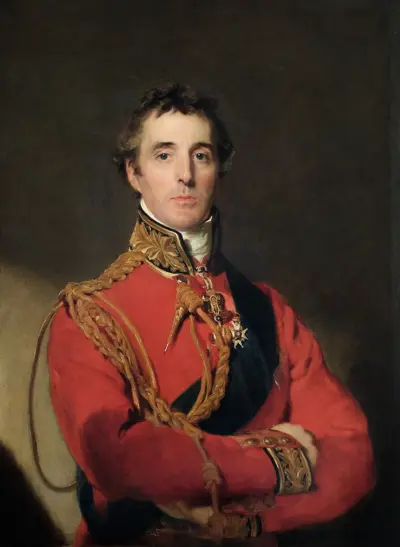
Arthur Wellesley, 1st Duke of Wellington, KG, GCB, GCH, PC, FRS was an Anglo-Irish soldier and Tory statesman who was one of the leading military and political figures of 19th-century Britain, serving twice as prime minister. He ended the Napoleonic Wars when he defeated Napoleon at the Battle of Waterloo in 1815.
