Czeslaw Milosz Quotes
As long as a society's best minds were occupied by theological questions, it was possible to speak of a given religion as the way of thinking of the whole social organism. All the matters which most actively concerned the people were referred to it and discussed in its terms. But that belongs to a dying era. We have come by easy stages to a lack of a common system of thought that could unite the peasant cutting his hay, the student poring over formal logic, and the mechanic working in an automobile factory. Out of this lack arises the painful sense of detachment or abstraction that oppresses the "creators of culture."
The Captive Mind, 1953
Sourced by: Eigen's Political and Historical Quotations


There are many paths to the top of the mountain, but the view is always the same when you get there.
With this seemingly tolerant tradition it is puzzling why the modern Chinese government is so inimical to some religions. Chinese history has shown that at critical times religious organziations did not follow this Confucian philosophy and insisted that all follow their path with violence greeting those who did not. One 18th century historical incident was particularly violent and saw 20 million deaths. This religious / political movement’s disastrous effects on China has traumatized Chinese governments ever since regarding intolerant and rigid religious movements. See {612649} and {38318}

New Lanark was a Utopian commune organized by Owen.


The original was in German. Spinoza was a Dutch Philosopher who originated this abstract notion of a universal God. This was one of the reasons fro his excommunication. Spinoza’s ideas were considered so radical and dangerous that he was the only man in history who was excommunicated by the Catholics, the Jews and the Muslims.

Quintus Septimius Florens Tertullianus. This quote is historically very important as it is one of the first expressions of religious tolerance. Tragically, this principle was ignored by most Christians for over a millennium. Some Christians still ignore it. See {626754} for a modern example.


This statement was made after he had led the Muslim Ottoman Turkish Army to success in capturing Constantinople—Byzantium, Istanbul—bringing the Byzantine Empire (Eastern Roman Empire) to an end. He had his sights set on the Western Roman Empire next which was the remainder of what they knew of as the world then.

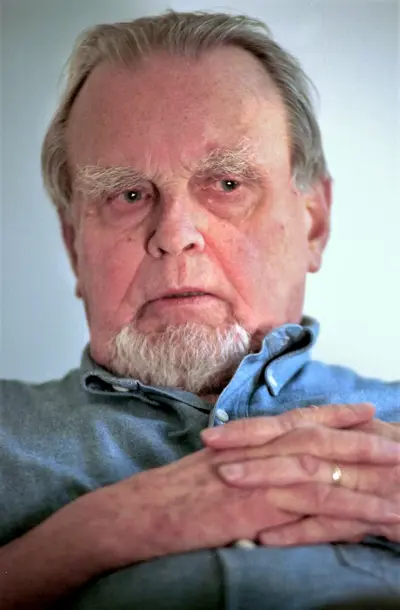
Czesław Miłosz was a Polish-American poet, prose writer, translator, and diplomat. Regarded as one of the great poets of the 20th century, he won the 1980 Nobel Prize in Literature. In its citation, the Swedish Academy called Miłosz a writer who "voices man's exposed condition in a world of severe conflicts".
