Arundhati Roy Quotes
As a writer, I've often said that, among the other things that we need to reclaim, other than the obscene wealth of billionaires, is language. Language has been deployed to mean the exact opposite of what it really means when they talk about democracy or freedom.
Roy, Arundhati. My Seditious Heart. Haymarket Books, 2019.


The Netherlands at that time had a representative republic, but whenever there were troubles, there were many who urged the appointment of a strongman—usually a prince or other noble. In the Dutch republic at the time, de Witt was the Chief Executive, but under their constitution, he could do little without the approval of the parliament. A strong leader with dictatorial powers was called for as there was little experience with a democratic republic and people did not have confidence that governance in a crisis was possible without dictatorial powers lodged in one man. Even in America, there tends to be more power taken by the presidency in time of war and other crises. So the fear and the argument has not changed in almost 400 years.


This important statement would not have been a noteworthy quote as so many have said it before, except for the fact that she was writing as a spokesperson of Nationalist China and she was the wife of the Nationalist Party leader, Chiang Kai-Shek. And the great failure of Chiang’s governance was the corruption and the excessive exploitation of the Chinese people by the wealthy. Madame Chaing, educated at Vassar College, knew just what to say to Americans and she mustered incredible support for the Nationalist cause most of which would never have been forthcoming if Americans knew the truth about the Nationalist Government. It was so corrupt, that the vast majority of the people aided the Communists in defeating Chaing, expelling him from the mainland, and relegating his government to Taiwan. Madame Chaing’s hypocrisy was legend. See {615696}.


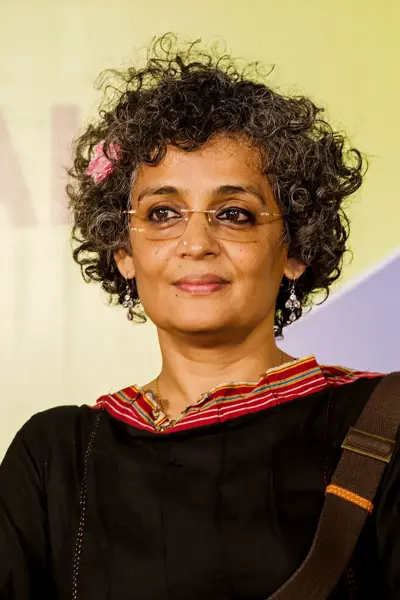
Suzanna Arundhati Roy is an Indian author best known for her novel The God of Small Things (1997), which won the Man Booker Prize for Fiction in 1997 and became the best-selling book by a non-expatriate Indian author. She is also a political activist involved in human rights and environmental causes.
