W. E. B. Du Bois Quotes
As a race, the Negroes are not lazy.
Du Bois, W. E. B. The Philadelphia Negro: A Social Study. University of Pennsylvania, 1899.

In never occurred to him that he and his family were also adverse to the backbreaking stoop labor of cotton picking.


This quotation illustrates the degree or irrationality that Southerners practiced in considering racial matters. Lee was stating what virtually all Southern “Gentlemen” believed. Here was a class of people who had hardly worked at day in their lives opining on the work attitudes of the class of people who did most of all the work in the South. The Southern Whites not only expected the Negro slave to do the work, but to be enthusiastic about working. And it never even occurred to Lee and most of the other whites that Negro lack of “disposition” to work was the result of the fact that they were forced to work with the benefits going to someone else. It was a character flaw in Blacks, if they were not enthusiastic and disposed to work when forced to. One of the few ways a slave could register his/her protest was to beat the system now and then and do as little work as possible. Free Blacks in the North were among the hardest and most enthusiastic working people in America—certainly moreso than the Southern white gentlemen.


The president was commenting on a Donald Trump campaign statement that African American were in the worst shape in history when the reality was just the opposite

Nixon, in his second attempt to win the Presidency was told by a small group of Southern Republican politicians that his support was wavering in the South. They had already left the Democratic Party in reaction to the Passage of the 1964 Civil Rights Act. They were concerned because in order to try and capture some of the more liberal anti-war Democrats, Nixon had been making speeches advocating the vigerous enforcement of of civil rights and improving the lot of the Negro. But Nixon could not afford to lose his political base inb the south. Hence the promise which did not keep very long after he was elected President. Nixon was not a strong civil rights President, but he was totally without principles and had no political idiology he would sacrifice any of his political capital for. So once he was elected, he didn't want to offend the centerists whose support he needed for his legislatrive program so he did pay lip service to the prinicples of equality when he himself was anti-Black, andti-Semitic and prejudiced in many areas including against intelelctuals.


Surprising to most people who know of President Theodore Roosevelt’s general liberals, his 4th son was an ultraconservative who founded and joined racist, anti-Semitic, right wing organizations, and to the distress of many in the family and without lent his name to many of the most extreme right wing causes and organizations.


This became one of the most widely quoted statements of the 1960s and 1970s.


This quotation shows two important historical facts about Southern Racism. The first is now great the social pressures were against any white who would try and alter the status quo. The second was that none the less there have always been whites in the South who, despite the great social penalties, did the right thing and not only improved the situation, but more important, made most Americans realize that Southerners were not all racists any more than all of any group had any negative behavior.

A Southern Republican congressman with a voting record that was against minority interest, for the first time in American, interrupted and insulted the President of the United States in the midst of an invited Presidential Address to Congress given by Barack Obama, calling him a liar. Carter, himself a Southerner, recognized the motivation.


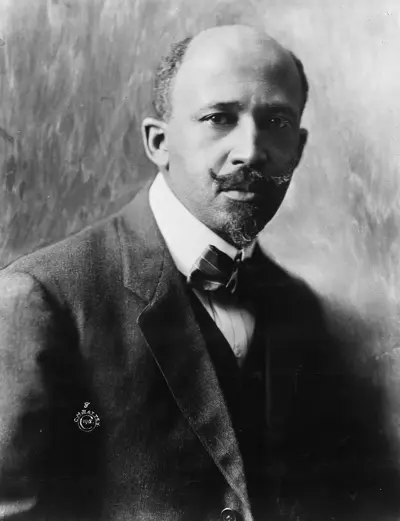
William Edward Burghardt Du Bois was an American sociologist, socialist, historian, and Pan-Africanist civil rights activist. Born in Great Barrington, Massachusetts, Du Bois grew up in a relatively tolerant and integrated community. After completing graduate work at the Friedrich Wilhelm University (in Berlin, Germany) and Harvard University, where he was the first African American to earn a doctorate, he became a professor of history, sociology, and economics at Atlanta University. Du Bois was one of the founders of the National Association for the Advancement of Colored People (NAACP) in 1909.
