Lewis F. Powell Jr. Quotes
As a matter of history, schoolchildren can and should properly be informed of all aspects of this Nation's religious heritage. I would see no constitutional problem if schoolchildren were taught the nature of the Founding Father's religious beliefs and how these beliefs affected the attitudes of the times and the structure of our government
Lewis F. Powell Jr., 1907-1998, U. S. Supreme Court Justice, Edwards v. Aguillard, June 19, 1987
Sourced by: Eigen's Political and Historical Quotations


In the city of Narragansett, RI, there Lester York had each Christmas season dressed up as St Nicholas, 4TH century Catholic Bishop, the precursor to Santa Clause. He played the part of the Bishop and discussed Christmas in that context. The presentation was very educational as students could learn of the culture of that time but they also received an authentic religious sermon of the time. By inviting York into the public elementary schools, the students were learning some history and culture but they were also involved in a religious service and doctrine—the divinity of Christ. The former was good; the latter illegal as the public schools were in addition to educating historically communicating religious messages. York’s presentations had many supporters who had argued that York’s presentation conveyed Christian messages very well and children should not be denied that opportunity. After much community discussion, the public schools withdrew their invitation to York, and he gave his excellent presentation in many community churches.


This book is endorsed by major religious organizations of all faiths as well as National School Boards Association, National Education Association, National PTA, National Association of Secondary School Principals, National Association of Elementary School Principals, American Association of School Administrators and others. It is used as a guideline by most schools systems in the United States.


From this quotation, {615902} and {615901} it is clear that the framers of the Constitution intended the treaty making powers to be shared by the President and the Senate. In practice, in modern times treaties are usually initially negotiated by diplomats under the supervision of the President and the Senate gets to concur or not in the ratification process. However, there have been a number of treaty failures including the League of Nations where the lack of coordination has resulted in a situation where the Senate had to accept or reject something which the President had negotiated and the Senate rejected the treaty.

The clergy of the colonies were split on the American Revolution, but those clergy who supported the revolution made a huge contribution to the individual American’s intellectual view of the legitimacy of Parliament’s making laws governing the American Colonies. The anti-British clerics called for action while other forces of colonial America urged caution.


Jinnah, although insisting on a Muslim state, was a modernist and assumed that there would be freedom of religion. To a certain extent he believed in separation of church and state. However, after his death Pakistan has moved ever further towards a strict adherence to Sharia and Islamic law.


In that era the favoritism of the government—especially state and local government—in favor of the of the Protestant Christians. Politicians started challenging the clear unconstitutional favoritism. The reformers were Republicans often referred to by the Democrats as “Godless Republicans”. A century later the Republicans would oppose strict separation of church and state with the Southerners and Fundamentalist Christians in their party and the Democrats fighting to maintain strict separation of church and state.


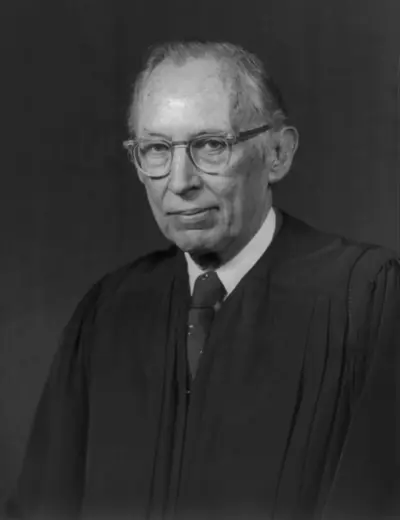
Lewis Franklin Powell Jr. was an American lawyer and jurist who served as an Associate Justice of the Supreme Court of the United States from 1971 to 1987. Powell compiled a generally conservative and business-aligned record on the Court.
