Mariana Mazzucato Quotes
As a businessman, Donald Trump has been associated with some of the worst excesses of a particular style of value-extracting and asset stripping capitalism: set up businesses, let them fail, avoid paying suppliers, use bankruptcy laws to avoid taxes for decades, then set up another business somewhere else. It is this model that is the cause of many problems we see today.
Mazzucato, Mariana. "I'm Mariana Mazzucato, I study the economics of innovation, and why we need to rethink capitalism. AMA!" Reddit, 7 Feb. 2017.


The President and his new appointee were half joking but many of the large corporations were attacking the new department and its head frequently. The extreme conservatives used the technique of personally discrediting the head of the agency to discredit the agency and its activities. The President himself was so popular that they did not dare attack him.


Inversion is an elaborate tax loophole whereby a large American corporation buys a tiny corporation in a country that has very low or no corporate income taxes. Once they own it, they Transfer the stock of the American Corporation to the small foreign corporation. Now the American corporation becomes a subsidiary of the foreign corporation whose headquarters is no longer in America. Then they move most of the profits to the “parent” corporation as most companies do. The difference is that the foreign corporation pays little or no taxes, and the American “Subsidiary” pays much less taxes than they used to pay. The have “inverted”—some say perverted--the ownership relationship. They do the same business that they did before in America, use America’s government services just as before, has America educate their workers as before, but they do not pay their fair share of taxes as before.

When Congress passed the laws giving tax relief to corporations, the purpose was to tax only the profits that were made by United States operations. Congress and the President never dreamed that American corporations would be so greedy and unpatriotic that they would actually move the headquarters of an American Corporation and turn it into a foreign corporation in a country with little or no corporate taxes, and the set up their accounting system so that most of the money would be “made” by the headquarters and not by the operating companies in the U. S. or other countries that had corporate taxes.

Money was backed by gold then and therefore limited and the country was growing, and needed more money to finance development. But the only way to then have more money in circulation was for the government to borrow it from the people who had it—mostly wealthy people in the East and in England. These gold owners charged very high interest rates. However there was much more silver in the U. S. and more was being mined every day. So for many populists, the answer was to make silver a basis for money. But those who had gold backed money wanted to maintain the shortage of currency in the growing nation The populists naively thought that if there was sufficient money supply all other problems like labor strife would disappear. Some did when the money supply was finally expanded, but it was no panacea.


Romney’s claim to presidential qualification was based on his success as a venture capitalist and his creation of jobs. However, his firm in many cases acquired firms, withdrew cash from the company, weakening the it, and then loading it with debt that it could not sustain, causing large layoffs or bankruptcy where Romney’s firm made big money,


It is not capitalism that is the problem but

In 1961 the President intervened in a labor dispute in the steel industry with the "understanding" that the steel companies would not raise their prices after the settlement. As soon as there was a settlement prices were raised:. The President "persuaded" the steel executives to rescind the increases.
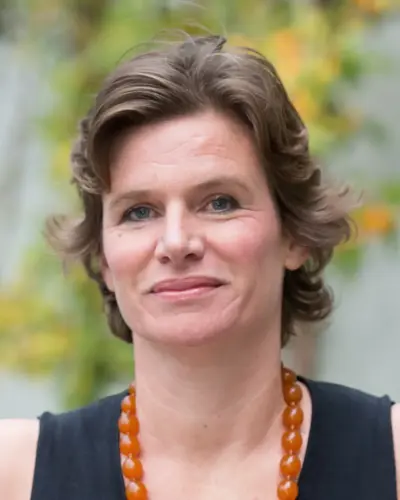
Mariana Mazzucato is an economist with dual Italian–US citizenship. She is a professor at University College London in Economics of Innovation and Public Value and she is the founder and director of their Institute for Innovation and Public Purpose (IIPP). Her research focuses on the relationships between technological, economic and social changes. She is a member of the Scottish Government's Council of Economic Advisers and South Africa's Economic Advisory Council. In 2019, she joined the UN Committee for Development Policy.
