William Cobbett Quotes
Another great evil arising from this desire to be thought rich; or rather, from the desire not to be thought poor, is the destructive thing which has been honored by the name of 'speculation'; but which ought to be called Gambling.
Cobbett, William. Advice to Young Men, and (Incidentally) to Young Women, in the Middle and Higher Ranks of Life. Mills, Jowett, and Mills, 1829, p. 41.


The military had made a mess of the Argentine economy and inflation was rampant. Some Argentines turned their Argentine pesos into dollars betting that the Argentine economic situation would get worse, This run from the peso would make it worse. If Argentina stabilized the peso, speculators in dollars would lose money. The Minister trying to discourage a run from the peso, warned Argentinians against the dollar investment. A days later the dollar went up over 30%. Those who had listened to the minister lost much of their money, He was soon forced to resign by the military dictators who controlled the government.


Most "clerks" were then members of the clergy.

At the time, it was generally felt that gambling was particularly harmful for poor and middle class people, than for wealthy aristocrats who could afford losses more easily. The solution was to make gambling casinos difficult and expensive to get to and so discourage their use by all except for the rich. Keynes, however, observed that the stock market was essentially a gambling system, and should socially and legally be treated the same as other gambling forms.

A “stock-jobber” at that time referred to a stock broker who bought and sold shares of companies and enterprises. Today it tends to refer to an unscrupulous stock broker or a short term speculator. In the 18th century, economists like Say questioned whether or not the stock jobbers performed any useful economic or other function. His and others concluded “no.” By the 21st century, many were asking the same question. So it is not a new issue as to the political debate over the utility of part of the financial industry. The short term speculators were for years considered gamblers until it was discovered that the more successful ones generally had inside information (often illegal) or used computer trading to take advantage of other shareholders whose computers were not as fast. However, the Great Depression and the Great Depression called into question whether or not the financial industry was itself a hazard to national economies if not the world economy. That questioning began in the 18th century.
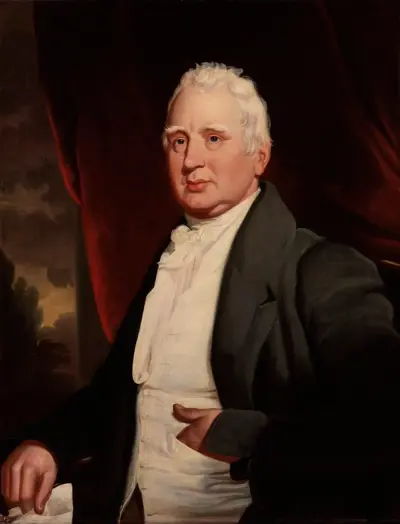
William Cobbett was an English pamphleteer, journalist, Member of Parliament and farmer born in Farnham, Surrey, one of a popular agrarian faction seeking to reform Parliament, abolish "rotten boroughs", restrain wanton foreign activity and increase wages, to promote domestic peace and ease poverty among farm labourers and smallholders. He backed lower taxes, saving, reversing enclosures of commons and resisting the gold standard of 1821. He sought an end to borough-mongers, sinecurists and "tax-eaters" (overpaid and corrupt bureaucrats, public servants and stockbrokers), and dismissed British Jews in a typecast by the same token. Early in life he was a soldier and devotee of king and country, but later pushed for a radicalism that helped to produce the Reform Act 1832 and gain him one of two seats in Parliament for the newly enfranchised borough of Oldham. He urged Catholic emancipation. He saw British agriculture and other economic output geographically. His polemics cover subjects from political reform to religion. His best known book is Rural Rides (1830, still in print). He argued against Malthusianism that economic betterment could support global population growth.
