Pierre-Joseph Proudhon Quotes
Anarchy, the absence of a master, of a sovereign.
Proudhon, Pierre-Joseph. What is Property? An Inquiry into the Principle of Right and of Government. Translated by Benjamin R. Tucker, B. R. Tucker, 1876, p. 277.


This is a very important quotation. It explains in great part, why there have been so few internal revolutions in Muslim countries. Al-Ghazi’s interpretation of Islamic Law and Theology concluded that even if the ruler is incompetent, corrupt, or destructive he should be supported and obeyed by all good Muslim citizens. The reason was that anarchy and/or chaos was an evil much worse for the Islamic community. There was one exception in the case of a ruler who was blasphemous or did not follow Islam. Then it was the duty of good Muslims. Since then, the ruler of an Islamic state, first seeks to ingratiated himself with the clergy. In Saudi Arabia, for example, the Royal Family gives enormous sums to all the clerics. They then urge dissidents and would be revolutionaries to accept the Royal Family with its flaws and shortcomings and accept their lack of freedom and human rights. And they tell all that the King and his family are all religious and support Islam. Therefore any revolt would be a tantamount to a sin. The Christian world had a different technique for inhibiting Revolution. Christian rulers claimed the Devine Right of Kings—that God had selected and ordained the king to lead. Regime change was contrary to the word of God. In a sense, the Islamic approach is more intellectually honest and seems to have worked much better than the Christians who have had so many revolutions. Better that is from the rulers point of view. From a democratic, Jeffersonian point of view revolting against an evil ruler was almost a moral obligation, and Al-Ghazali’s principle is all wrong and is keeping the Muslim countries from reaching democracy.


In this quotation, the conservative hero, Mises, sounded like an anarchist or a libertarian.


Although extremely enlightened and liberal in man ways, as an autocrat she saw virtues in monarchy.


It is hard for us today to understand why intelligent, thoughtful, people would seriously consider and even advocate anarchy. Yet there were many intelligent people who preached anarchy. The key to understanding this is that it is also hard for us to realize how terrible and actually dangerous was typical life under the Russian Government of the Czars. It was not only that most people were serfs--virtually slaves, but the government officials, the military and civilian both, could and did, abuse people in every way imaginable. In America today, if any of us were unfortunate to be the victim of violence, the odds are high that it would be at the hands of another citizen. In Russia (and other countries) at the time, the odds were that the perpetrator of the violence was a government official or government sanctioned person—police, military, aristocrats, civil officers. As but one example. Cossacks would frequently get drunk, pillage and rape a community and kill any who resisted—all with impunity. This quotation from Tolstoy is the classic argument of the anarchist at the time. It was impossible that the absence of government could be as bad as the government then was.


Gets was commenting on the Apple Computer Company who refused to obey a court order to create a program that would break into any iPhone. Apple thought the court order was not only bad public policy, but was not legal, so they refused and appealed to start the legal process. However, the FBI which had claimed that they had no other way to view some critical investigative data, found one, and not wanting the case to go to higher courts where they might or might not lose, the dropped the case, thus stopping the legal appeal as in the United States courts will hot hear theoretical cases as they will in some countries. Since apple was not in danger of being held in criminal contempt any longer the could not longer appeal.


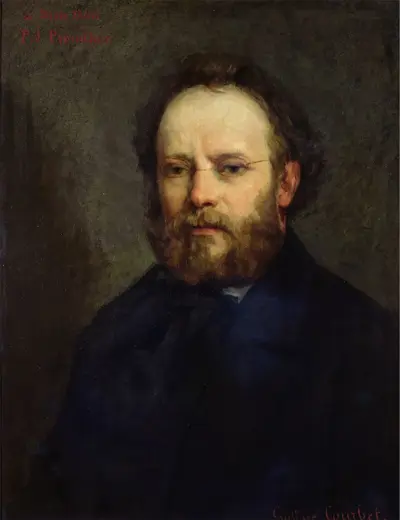
Pierre-Joseph Proudhon was a French socialist, politician, philosopher, economist and the founder of mutualist philosophy. He was the first person to declare himself an anarchist, using that term and is widely regarded as one of anarchism's most influential theorists. Proudhon is considered by many to be the "father of anarchism". Proudhon became a member of the French Parliament after the Revolution of 1848, whereafter he referred to himself as a federalist. Proudhon described the liberty he pursued as "the synthesis of communism and property". Some consider his mutualism to be part of individualist anarchism while others regard it to be part of social anarchism.
