Elizabeth Cady Stanton Quotes
American women of wealth, education, virtue and refinement, if you do not wish the lower orders of Chinese, Africans, Germans and Irish, with their low ideas of womanhood, to make laws for you and your daughters awake to the danger of your present position and demand that woman, too, shall be represented in the government!
Stanton, Elizabeth Cady, et al., editors. History of Woman Suffrage. Vol. 2, Fowler & Wells, 1882, p. 333.


The editorial was in support of women’s suffrage—the right to vote which at the time women did not have in Britain. Women were very active in protests and demonstrations. Tactics sometimes involved civil disobedience and chaining themselves to public buildings. It was the civil disobedience and disruptions that the newspaper referred to as the “follies and excesses.” In retrospect today, it is amazing how threatened the society felt and how they reacted to the “threat” of females voting. It does however give us a perspective on those contemporary societies which restrict women’s voting rights.


Referring to new laws that would be necessary after a proposed Declaration of Independence:

She was referring to a letter which she had sent to her husband, John Adams.

She was then an invalid trying to recover from the toll of all her work at the front lines of wars had taken. The men she had so helped, did not return the gesture when it came to voting, She did not live to see women get the vote in America.

She was the first presidential candidate's wife to admit such a radical position.


Billinghurst was physically handicapped without the use of her legs. She protested and marched in protest parades using a hand propelled tricycle which the police sometimes dumped her out of and left her immobile in alleys.

Although born and educated in the United States, she lived mostly in England and was politically active there.
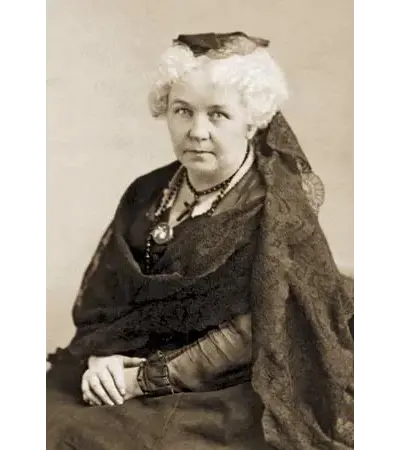
Elizabeth Cady Stanton was a leader of the women's rights movement in the U.S. during the mid- to late-1800s. She was the main force behind the 1848 Seneca Falls Convention, the first convention to be called for the sole purpose of discussing women's rights, and was the primary author of its Declaration of Sentiments. Her demand for women's right to vote generated a controversy at the convention but quickly became a central tenet of the women's movement. She was also active in other social reform activities, especially abolitionism.
