John Quincy Adams Quotes
[America] well knows that by once enlisting under other banners than her own, were they even the banners of foreign independence, she would involve herself beyond the power of extrication, in all the wars of interest and intrigue, of individual avarice, envy and ambition, which assume the colors and usurp the standards of freedom …. She might become the dictatress of the world. She would no longer be the ruler of her own spirit.
The strong American instinct toward unilateralism, narrowly defined self-interest, and operating under the banner of the United Nations has its traditional roots.
John Quincy Adams, 1767-1848, 6th President of the United States (Independent, MA), Independence Day Address, July 4, 1831
Sourced by: Eigen's Political and Historical Quotations

Adams was not only generally wary of involvement in foreign intrigues but was suspicious of the Greek war of independence in that the Greeks were no more committed to democracy and freedom than the Ottomans were.


American official foreign policy had been officially isolationist—to not get involved in the squabbles and fights of other nations. Angell however pointed out that even before WWII, America had formally been involved in 6 foreign wars and used military incursions on foreign soil on almost 100 occasions.


Announcing his opposition to the covenant of a League of Nations:

After the economic & power collapse of the Soviet Union, the United States was the only remaining superpower. Givern Russia's diminshed capability and many Americans still carrying resentments about the Cold War, America's foreign policy and diplomacy did not treat Russia as if they were a very important power in the world. Puten greatly resented the fact that Russia was no longer considered or treated like a world power, Russia had a nuclear arsenal and a total delivery system what was in the same destructive potential class as the United States. There were many Russiabs who had similar resentments and Putin sert out to adopt policieis and practices that would force the United States and the other nations to consider them with more dignity, respect and consdideration. This was a typical statement of the period when he was "stoking the fires of Russian resentment.


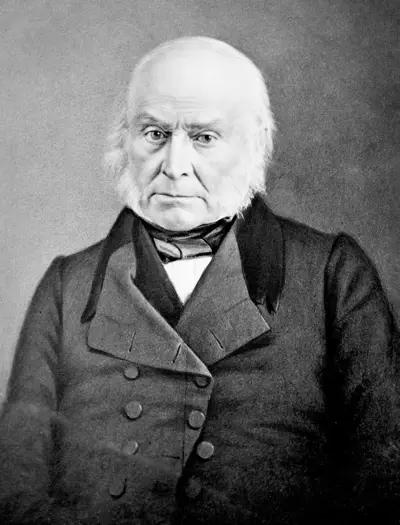
John Quincy Adams was an American statesman, diplomat, lawyer, and diarist who served as the sixth president of the United States, from 1825 to 1829. He previously served as the eighth United States Secretary of State from 1817 to 1825. During his long diplomatic and political career, Adams also served as an ambassador, and as a member of the United States Senate and House of Representatives representing Massachusetts. He was the eldest son of John Adams, who served as the second U.S. president from 1797 to 1801, and First Lady Abigail Adams. Initially a Federalist like his father, he won election to the presidency as a member of the Democratic-Republican Party, and in the mid-1830s became affiliated with the Whig Party.
