Barbara Ehrenreich Quotes
America is addicted to wars of distraction.
Ehrenreich, Barbara. Blood Rites: Origins and History of the Passions of War. Metropolitan Books, 1997.


the modern believe is that democracies are not prone to war, especially against other democracies. Seward, and some others believe that democracies can be pushed into war by politicians you do so for partisan political advantage. Politicians often have to show how tough they are.

That was an ironic statement. Shortly thereafter we invaded Mexico, occupied the country, pressured it into “selling us much of what is now the Southwest of the United States, and finally left.


Although Great Britain had abolished slavery, British economic interests during the Civil War suffered because of the northern blockade of the South. Much political opinion in England was hostile to the blockade policies of the Union. Bright, a great admirer and supporter of the United Sates and the Union cause was concerned that the United States might drift into War with Great Britain. His letter to Senator Sumner was written with the understanding that it would be in shared with President Lincoln, and it was actually read at a cabinet meeting.

Since the Partition of India to create the state of Pakistan, Pakistan has wanted to integrate the Muslims—especially near the border. However, many Indian Muslims did not choose to leave India for the new Islamic nation. Pakistan has had designs on some of the Indian areas and has maintained a very large army.


There were many who thought that the Russians would view the Mutual Security Act as aggressive and they might respond with some kind of aggressive retaliation and this could lead to war. Others felt that containment would reduce the likelihood of war.


Russia is not the only nation who believed this. There were and are some politicians and military officers in almost every country who believe this. However, for the last few centuries, this has rarely been the view held by the majority of the politicians and military in most nations. And even fewer where the leadership accepted this posiitin. Russia, was one of those counties that did hold this few and kade it policy was in the 2nd decade of 2016,


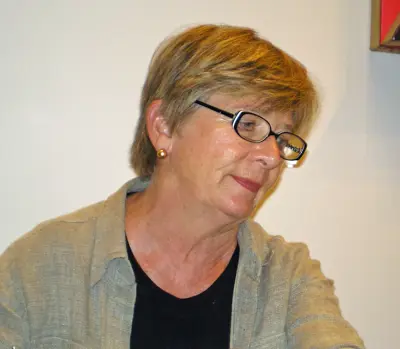
Barbara Ehrenreich is an American author and political activist who describes herself as "a myth buster by trade" and has been called "a veteran muckraker" by The New Yorker. During the 1980s and early 1990s she was a prominent figure in the Democratic Socialists of America. She is a widely read and award-winning columnist and essayist, and author of 21 books. Ehrenreich is perhaps best known for her 2001 book Nickel and Dimed: On (Not) Getting By in America. A memoir of Ehrenreich's three-month experiment surviving on minimum wage as a waitress, hotel maid, house cleaner, nursing-home aide, and Wal-Mart clerk, it was described by Newsweek magazine as "jarring" and "full of riveting grit," and by The New Yorker as an "exposé" putting "human flesh on the bones of such abstractions as 'living wage' and 'affordable housing'." She is a recipient of a Lannan Literary Award.
