Hans Selye Quotes
Almost no germ is unconditionally dangerous to man; its disease-producing ability depends upon the body's resistance.
Selye, Hans. The Stress of Life. McGraw-Hill, 1956, p. 158.


This is an amazing quotation and shows that the Ancient Romans who had a very sophisticated medical technology had a notion of germs and microbes. Ancient Rome was the first organized nation for which health, medicine, public health, and medical research were governmental functions unlike Greece and other civilizations where health was a personal function. Roman policy emphasized prevention unlike the Greeks. Sanitation and water supply and quality were government responsibilities and the Roman standard was not reached in the rest of the world until the 18th century. Heath and medicine was also a major military responsibility. The Roman Empire depended on its army, and trained professional soldiers. Disease was a greater risk to the soldiers than were battlefield casualties, and the Romans had a strong vested interest in keeping these highly trained men alive and healthy—not just the wealthy Roman citizens. The Romans were open to techniques that were developed throughout the Empire and beyond and tended to adopt all good ideas and a few bad ones as well While they had advanced surgery, the public health was the strongest aspect of Roman medicine and health and this notion of germs and disease. Remember that the writer was not a medical or scientific man, but was just indicating what was general wisdom of the Roman elite.


This was the first cigarette company that admitted what by then had been known by the cigarette companies for almost 50 years during which they continued to knowingly kill people and deny that there was any harm that could come from smoking.


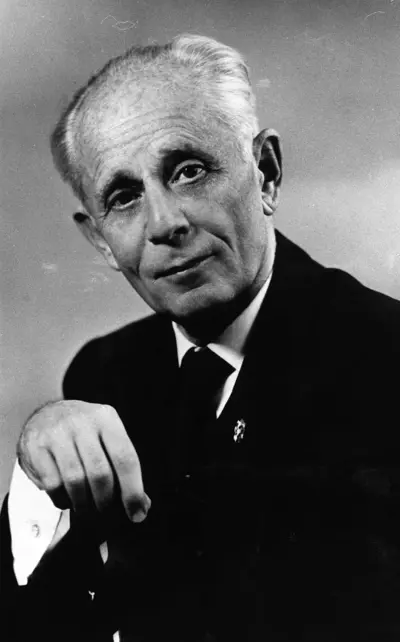
János Hugo Bruno "Hans" Selye CC, a pioneering Hungarian-Canadian endocrinologist, conducted important scientific work on the hypothetical non-specific response of an organism to stressors. Although he did not recognize all of the many aspects of glucocorticoids, Selye was aware of their role in the stress response. Charlotte Gerson considers him the first to demonstrate the existence of biological stress.
