Tom Coburn Quotes
All you have to do is look at Congress’s approval ratings. It’s normal that it’s low. It’s not normal that it is 9 percent or 11 percent or 13 percent. We’ve given up our legitimacy. Legitimacy is about being honest on the issues, not being partisan.
Tom Coburn, U. S. Congressman & Senator (Republican, OK), Interview, “Power is a Tool”, New York Times Magazine, March 16, 2014
Sourced by: Eigen's Political and Historical Quotations


Congress at that time had about a 12 percent public approval rating. Other emergency disaster appropriations had been made in previous years in days or weeks, but the aid for New Jersey, New York and Connecticut had been voted by the Democratic-controlled Senate but not in the Republican controlled House. The Republican House leadership had planned a vote after the Fiscal Cliff vote the previous evening before the end of the Congressional term. Then the speaker cancelled the vote infuriating Christie and many of the members of Congress. His reason was that there was opposition from the Tea Party Conservative wing of his own party who had just been badly beaten on the fiscal cliff legislation, and the Speaker was up for reelection by his own party caucus the following day. If the vote had proceeded, it would have passed with Democratic and some Republican support but with the opposition of the conservative wing some of whom noted that the states seeking the emergency aid had just recently voted for President Obama and they were opposed to more federal spending despite the fact that emergency aid had never before been subjected to such partisan criteria. After much pressure, the Speaker then committed to an up or down vote in the following Congress to the chagrin of some of the Tea Party members. Governor Christie, much admired for his commitment to his state and not politicking was his candid self but he did not even go as far as Republican Congressman Peter King {630995}.


A minority of newly elected ultra conservative Tea Party Republicans intimidated most of the main line Republicans by threatening to run against them in their primary elections. The result was that almost no legislation was passed and there was a constant drumbeat of attacks against anything the government was doing or might do in the future. Public confidence in government was driven very low, with only the public confidence in Congress lower. The Democrats who could accomplish very little in that circumstance became very unpopular while the Republicans were even more so. However, many Tea Party Republicans viewed that as a victory as their major objective is to enfeeble government—especially the Federal government.


The 113th Congress was the worst Congress in history in terms of hyperpartisanship, lack of comity, and ability to pass legislation. They passed less than 100 bills whereas a normal modern Congress passes 7 or 8 times that number. No Congress in history could only agree on less than 100 bills. The polls had Congressional approval down to single digits.

That Congress had passed less legislation than any other in modern history. Hyperpolarization and a strategy of the Republicans who held the House but not the Senate of the Presidency together with more Republican filibusters in the last 6 years than in all of American History together.

The Congress was in a hyper-partisan gridelock and was unable to pass most legislation.

The House of Representatives trying to adjust to Tea Party members voted against anything Democrats were for even if Republicans had created the legislation and previously supported it. The Congress the previous year had been the least productive in American history and it was mired in hyper-partisan gridlock, and the American public was fed up with Congress.

See {598081} for a similar idea expressed by his wife Hillary.


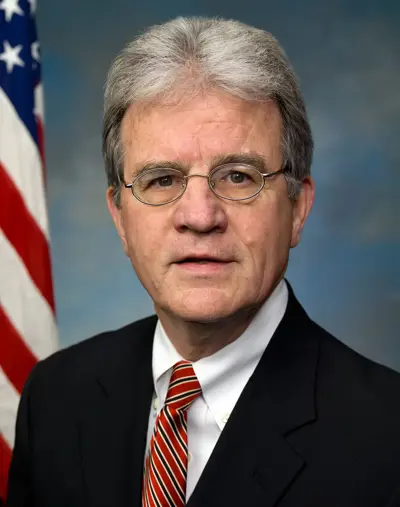
Thomas Allen Coburn was an American politician and physician. A Republican, he was a United States Representative and later the junior United States Senator from Oklahoma.
