Harold Pinter Quotes
All that happens is that the destruction of human beings - unless they're Americans - is called collateral damage.
Pinter, Harold. "Wilfred Owen Award Acceptance Speech." Haroldpinter.org, 18 Mar. 2004.


Hamas had fired thousands of rockets and other missiles at Israeli population centers—war crimes under the Geneva Conventions. Israel finally retaliated against Hamas facilities in Gaza. However, in an unprecedented effort to avoid civilian casualties, the Israeli Defense Forces warned the people by indicating which targets they were going to strike. They also dropped leaflets in Arabic telling the civilians that they are not the targets but to try and avoid harm to them and their families, they should evacuate the neighborhoods that would be under attack. Hamas had placed their missile launchers and other weapons in and near schools, hospitals, mosques and civilian housing risking their civilian population—see {640841}.

This is true. There never has been any International law that made a belligerent responsible for civilian damages and deaths that were the result of collateral damage. However, the United States over the years, more so than any other country. Provided huge amount of aid to the citizens of the enemy nations although there was no legal obligation to do so.

Bombing had reached the point where conventional bombing raids on industrial cities like Tokyo and Hamburg produced even more civilian casualties than did the atomic bomb at Hiroshima. Tibbets’ view, through the lens of hindsight, was developed by many of the Allied servicemen who had been forced into war by expansionist and militaristic nations like Japan and Germany both of which placed much of their war material manufacturing capability in the midst of their otherwise civilian cities. Both brutally violated the laws of war and committed atrocities many times over before the allies began retaliating. There are still some who believe that it was wrong to drop the atomic bomb on Japan. Some even feel that the mass bombing of Japanese and German cities in retaliation and in furtherance of the war effort was morally wrong. But at the time, the millions of casualties anticipated in the invasion of the Japanese mainland, persuaded virtually every American soldier and civilian that there was nothing wrong with use of the Atomic bomb, and many saw it as an absolute Godsend to prevent all the American and Japanese causalities that would have come otherwise. Many scholars remark on how it was virtually impossible to find any significant number of misgivings before or just after Hiroshima. Tibbet’s view was typical.


Executive Order 12333 prohibits political assassinations. The administration took the position that the prohibition did not apply to war where assassination (targeted killing) of enemy leaders is clearly permitted. The problem was that the George W. Bush Administration did not classify the “War on Terror” as a war. They didn’t want to treat captured jihadists as prisoners of war. The Obama administration also would not ask Congress for a Declaration of war, and this caused the moral, ethical, and legal ambiguity that has plagued targeted killings by drones or other means throughout the Afghan and Iraq Wars which were legally not wars.


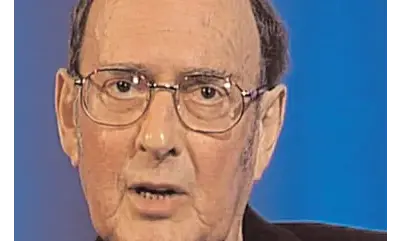
Harold Pinter CH CBE was a British playwright, screenwriter, director and actor. A Nobel Prize winner, Pinter was one of the most influential modern British dramatists with a writing career that spanned more than 50 years. His best-known plays include The Birthday Party (1957), The Homecoming (1964), and Betrayal (1978), each of which he adapted for the screen. His screenplay adaptations of others' works include The Servant (1963), The Go-Between (1971), The French Lieutenant's Woman (1981), The Trial (1993), and Sleuth (2007). He also directed or acted in radio, stage, television, and film productions of his own and others' works.
