Harry Emerson Fosdick Quotes
All of us must have heard about the people who call themselves the Fundamentalists. Their apparent intention is to drive out of the evangelical churches men and women of liberal opinions…. And now, in the presence of colossal problems, which must be solved in Christ’s name and for Christ’s sake, the Fundamentalists propose to drive out from the Christian churches all the consecrated souls who do not agree with their theory of inspiration. What immeasurable folly!
Reading this quotation, one would think that it was uttered in the early 21st century when the Christian Fundamentalists drove Christian liberals out of many of the evangelical churches and out of the Republican Party. However, this process and conflict has been ongoing for almost a century. This quotation was made in 1922.
Harry Emerson Fosdick, 1878-1969, Protestant Cleric and Author, Sermon, “Shall the Fundamentalists Win?” June 10, 1922
Sourced by: Eigen's Political and Historical Quotations


He was referring to President George W. Bush, who was not only a fundamentalist, born again Christian himself, but included people in his administration and as beneficiaries of his administration specifically because they were religious fundamentalists and in some cases kept other out even filtering for religious belief in the civil service jobs of the Justice Department itself.


What was particularly unusual about this quote was that Cronkite had always been so circumspect about his own political views and opinions and rarely expressed personal criticism of any group or movement. When he was the national anchor for CBS News, he was so non partisan that he became the “most trusted man in America.” By 2007 however, most of the radical religious right had organized a serious movement which unlike other self interest groups which wanted to expand their rights or benefits, much of the radical religious right strove to curtail the rights of other Americans who differed from them as to religious interpretation, concepts and role of government, sound family structure and relationships, gender equality, sex, and personal freedom.

His intolerance and bigotry not only is of Muslims and Hindus, but extends to some Protestant denominations as well. See {643060} for additional examples of bias on the part of this erstwhile Presidential aspirant. To him, religions, unless they agree with his religious beliefs, are evil and dangerous to society.

Munir was a strong advocate for civilian control over the military and as exposed many military atrocities and disappearances. He was poisoned on a Garuda Airlines flight to Holland where he was exposing more of the human rights violations of the Indonesian Military.


While Perez describes the situation accurately, he does not mention here that there is a minority of fundamentalist Jewish Israelis, and they too do not make compromises easily. Nor do the Christian fundamentalists in the United States. All say, “How do you compromise with the will of God.”

Many would argue that the situation is the same today, over a hundred years later.

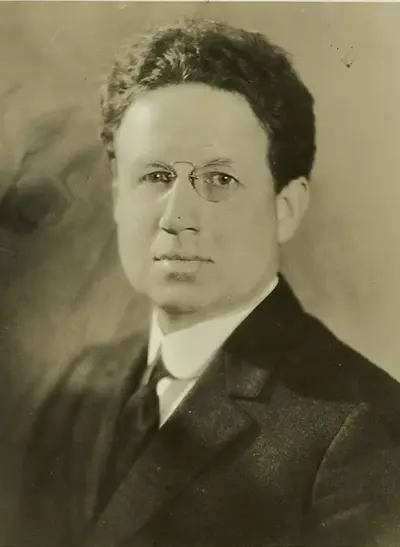
Harry Emerson Fosdick was an American pastor. Fosdick became a central figure in the Fundamentalist–Modernist controversy within American Protestantism in the 1920s and 1930s and was one of the most prominent liberal ministers of the early 20th century. Although a Baptist, he was called to serve as pastor, in New York City, at First Presbyterian Church in Manhattan's West Village, and then at the historic, inter-denominational Riverside Church in Morningside Heights, Manhattan.
