Carl Schmitt Quotes
All law is situational law. The sovereign produces and guarantees the situation in its totality. He has the monopoly over this last decision.
Schmitt, Carl. Political Theology: Four Chapters on the Concept of Sovereignty. Translated by George Schwab, MIT Press, 1985, p. 13.


The assumption of one supreme authority being necessary for a state, has been the most common assumption in almost all cultures and times before the American Revolution. What is amazing is that the Founding Fathers rejected this notion in favor of our complex system of checks and balances restrained by a Constitution which no society had ever tried before. England in contrast as it became more democratic, simply shifted the supreme, uncontrollable entity from the King to the Parliament which it is even today. Parliament can do virtually anything unrestrained by anything except their judgment and tradition.

This is just the opposite of the American Democracy in which the government serves the citizens rather than the Fascist opposite notion.


See {620510} for a much older expression of this idea.

He supported the Presidential concept as the least worst option.


This is a principle that most American jurists would applaud, with the exception of the very far right that does not even want foreign law consulted by the courts even for “useful knowledge” that they might contain. This is the most formalized and sophisticated compendium of laws of the so-called “barbaric peoples” of Europe. The compilation was in many ways a documentation of the traditional laws of the Visgoths that had evolved over hundreds of years.


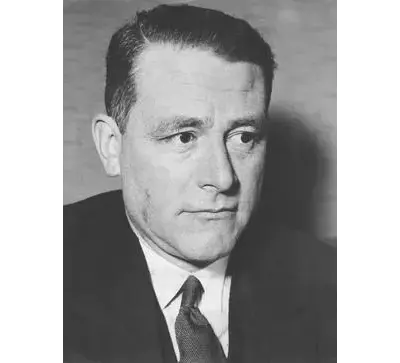
Carl Schmitt was a German jurist, political theorist, and prominent member of the Nazi Party. Schmitt wrote extensively about the effective wielding of political power. A conservative theorist, he is noted as a critic of parliamentary democracy, liberalism, and cosmopolitanism, and his work has been a major influence on subsequent political theory, legal theory, continental philosophy, and political theology, but its value and significance are controversial, mainly due to his intellectual support for and active involvement with Nazism. Schmitt's work has attracted the attention of numerous philosophers and political theorists, including Giorgio Agamben, Hannah Arendt, Walter Benjamin, Susan Buck-Morss, Jacques Derrida, Jürgen Habermas, Waldemar Gurian, Jaime Guzmán, Reinhart Koselleck, Friedrich Hayek, Chantal Mouffe, Antonio Negri, Leo Strauss, Adrian Vermeule, and Slavoj Žižek, among others.
