George S. Patton Quotes
All conquerors have made up to the priests of the conquered
Patton was no exception. The religious leaders of any community, if co-opted, can make occupation much easier.
George S. Patton, 1885-1945, U.S. Army General, Letter to his wife August 2, 1943
Sourced by: Eigen's Political and Historical Quotations

After a reception given by Lady Astor, Channon wrote in his diary that the “Cliveden Set” {598323} would be criticized because it was in favor of the policy of appeasement. The name came from the seat of Lord and Lady Astor, who were both supporters of the policy. To some the policy was seen as pro-Hitler, but Channon saw it as reasonable and in concert with Neville Chamberlain’s views. Even so, Chamberlain’s policy of appeasement was very controversial. This very policy prevented early Allied involvement in World War II and therefore gave Hitler time to buildup the German military while invading much of Eastern Europe.

Sometimes referred to as Gaspar de Toledo. This quotation Illustrates one of the ways that Churches maintained power over the secular government even though they were supposedly separate. By maintaining control over the secular leaders consciences and sense of morality, the Church could control the secular government. In this particular historical case, there was not even a supposed separation. The Confessor had an ex officio role in the high council. See {629457}.

This is the quotation that came to define Chamberlain’s naivety for history and the icon of failed diplomacy. However to see the beginning of the sequence of events that would lead up to this statement, see {585940} when Chamberlain suggested the infamous meeting in Munich. There had been an interesting history to Chamberlain’s appeasement of Germany. 39 years earlier, Chamberlain’s father, then Britain’s Colonial Secretary, and advocated a natural alliance with Germany. See Joseph Chamberlain, 1836-1914: {585939}.

Ingersoll was considered to be the greatest orator and political thinker of his day, but his overt atheistic views curtailed his elected political career.

The writer was born and brought up a Muslim and because he criticizes Islam, he has had a death fatwa issued against him much like Salman Rushdie.

Halsey was a big supporter of the use of the Atom Bomb against Japan. His ships had battled the Japanese navy from Pearl Harbor to Japan’s eventual surrender and had seen the cruelty of the Japanese occupation and aggression throughout the Pacific. His ships were the first to be sunk by Kamikaze suicide pilots at the Battle of Leyte Gulf where over 3000 American sailors were killed in the battle that finally destroyed the Japanese Navy’s ability to wage war.


Conceptually this is one of the most absurd documents in history, written by a European King to the native Indians of the new world, virtually all of whom were illiterate, knew nothing of Christianity or of European politics.

Spinoza’s ideas were considered so radical and dangerous that he was the only man in history who was excommunicated by the Catholics, the Jews and the Muslims. This was his observation after his first excommunications -- by his Jewish Congregation in Amsterdam.

Hopkins was a social worker with no military of political experience. But the President trusted him implicitly. Most American military officers and Ambassador to England Joseph P. Kennedy, a Nazi sympathizer & father of JFK, believed that England could not stand up to Hitler. Any military aid we gave England would fall into the hands of the Germans. Everyone was shocked when Roosevelt sent Hopkins to England to make a military recommendation. To impress Hopkins with something he thought Hopkins would be interested in, Churchill led a tour of workers cottages built by the government. Hopkins surprised Churchill and his aids who would never forget this statement & then asked to see the military facilities. Hopkins distressed the American military by recommending that Britain could hold out against invasion if they received military aid. Despite the contrary military advice, FDR accepted Hopkins’ recommendations, and the rest is history. He had been right and much of the military wrong.


This famous quotation has been attributed to Voltaire, 1694-1778, and French Philosopher, Denis Diderot, 1713-1784. Most quotation collections erroneously attribute it to Diderot in the version “Men will never be free until the last king is strangled with the entrails of the last priest.” Both Voltaire and Diderot used the quotation as did many others opposed to monarchy and the then repressive church hierarchies. But the origin of the famous phrase was with Meslier. When the priest died, three handwritten manuscripts were found written and signed by him in which he attacked religion in general and the church and the Bible in particular. His Testament was read by Voltaire and Denis Diderot among others and he was very influential in their development as opponents of organized religion.
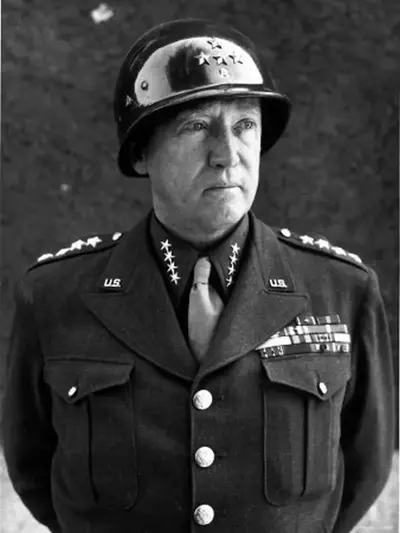
George Smith Patton Jr. was a general in the United States Army who commanded the Seventh United States Army in the Mediterranean theater of World War II, and the Third United States Army in France and Germany after the Allied invasion of Normandy in June 1944.
