Arthur A. Fletcher Quotes
After World War II the federal government figured out that Detroit could make 6 million cars a year and there were not enough roads to put them on.
Explaining the origin of the Interstate Highway System:
Arthur A. Fletcher, Chairman, U. S. Commission on Civil Rights, Speech, The Police Foundation, April 6, 1993
Sourced by: Eigen's Political and Historical Quotations

it was done in the Eisenhower administration

The automobile assembly lines of Detroit, had been planned to be converted to factories to produce a huge supply of planes, tanks, trucks and guns which were instrumental in winning the Second World War.


The mayor had resisted the rebuilding of a major downtown elevated highway when it was discovered that it was badly in need of repair. Typically, local officials accede to almost any pressure from AAA and the commercial interests wanting to see traffic flow maintained and improved. But a large proportion of the citizens preferred to have the downtown open to the waterfront and wanted the highway torn down despite the negative impact on vehicular traffic. Typically the traffic interests would prevail but Nickles refused to “pander” to the traffic interests.


At the time, there was no way of reaching Alaska from the other mainland United States except by air or sea. Alaska was thought to be very vulnerable to Japanese invasion. The Alaskan Canada Highway (ALCAN) would result.


What Mises says in this quotation is true. What he does not say that by the time the automobile was developed and then the airplane, the Railroad monopoly had impeded and destroyed so many different entities that the governments had cracked down and curtailed much of the ability of the Railroads to exercise monopolist power. If the Railroads had as much power in 1920 as they did in 1870, there probably never would have been a thriving auto industry and the airlines would likely never have succeeded. Mises again exaggerates a basic point that large monopolistic companies and industries often have not been able to stave off new technology and approaches. While true in many cases, the cause is not necessarily fundamental to economics but has sometimes (as with the railroads) been caused by Government regulation and reform. A better example is that the large sail dominated shipping industry was not able to stop the coal fired steam engine ships. Indeed the shipping owners embraced the new technology. The best examples of Mises point occurred after Mises died. For example, Microsoft was not able to prevent Google from dominating many of Microsoft’s positions in the IT world.


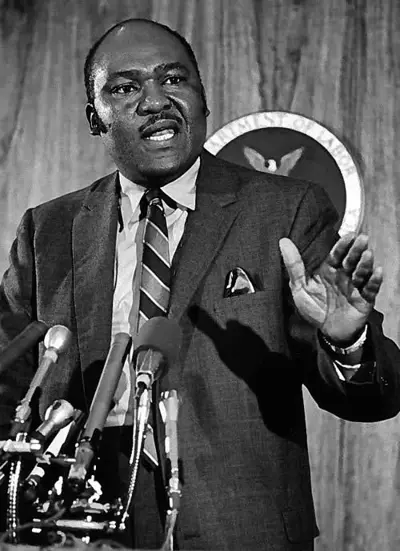
Arthur Allen Fletcher was an American government official, widely referred to as the "father of affirmative action" as he was largely responsible for the Revised Philadelphia Plan.
