Donald Kennedy Quotes
Academic freedom really means freedom of inquiry. To be able to probe according to one's own interest, knowledge and conscience is the most important freedom the scholar has, and part of that process is to state its results.
Kennedy, Donald. Academic Duty. Harvard University Press, 1997, p. 192.


The justice was ruling that copyright did not preclude fair use by others for educational and scientific purposes.


In many nations, including the United States on occasion, governments have made laws as to what is valid science and what is not. Tennessee and other Bible-Belt States have and still do on occasion. The latest being Evolution, which even in the beginning of the 21st century, Kansas determined that it was not proven science, when it is as proven as any science has ever gotten.

The Scientific Project that developed the Atomic Bomb. Oppenheimer was the great physicist who directed the successful development of the atomic bomb so as to build the weapon before Hitler did in World War II. However, as the technology evolved, he had doubts as to the wisdom of creating even more powerful hydrogen weapons. His viewpoint was hurting the administration’s policy of rapid unlimited nuclear weapons development, and he was the victim of a character assassination whereby his security clearance was withdrawn. The “father” of the atomic bomb was the first American casualty of atomic weapons development.


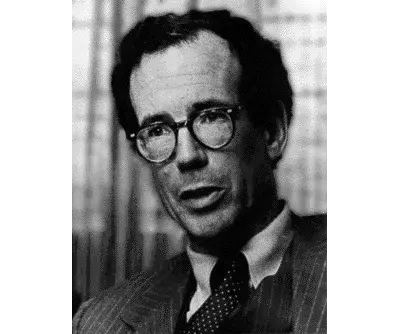
Donald Kennedy was an American scientist, public administrator, and academic. He served as Commissioner of the U.S. Food and Drug Administration (1977–1979), President of Stanford University (1980–1992), and Editor-in-Chief of Science (2000–2008). Following this, he was named president emeritus of Stanford University; Bing Professor of Environmental Science and Policy, emeritus; and senior fellow of the Freeman Spogli Institute for International Studies.
