Anibal Cavaco Silva Quotes
Abortion is a social evil to be avoided.
Portugal, a traditional Roman Catholic nation where the Church has always had great influence, had laws banning abortion. However, in a national referendum the Portuguese people voted overwhelming to allow abortion despite the Church’s stand. The Parliament then overwhelmingly passed a law legalizing abortion on demand up to the 10 the week of pregnancy. The President, though opposed personally to abortion signed the bill. This quotation illustrates a common occurrence in industrial democracies whereby politicians will not impose their personal moral views on the laws of society but may well have contrary personal views.
Anibal Cavaco Silva, President of Portugal, Statement upon signing a law to allow abortion, April 10, 2007
Sourced by: Eigen's Political and Historical Quotations


This is a wonderful example of a good rhetorical technique. He focuses the attention on the unborn by observing that all his opponents on this point have already been born. Of course, he and all his supporters on the point—those who are against abortion—have already been born also. So what would the unborn say? Well that no one could know nor can any one know if the unborn have any thoughts must less thoughts on the subject of abortion.


John Ashcroft was then the Attorney General and a foe of abortion.


Churches are political organizations too and are subject to the forces of their membership. In the case of the Southern Baptist Convention in 1971 they passed resolutions to assure the right of a woman to have an abortion to protect her health. The position on abortion changed steadily thereafter to even pass Constitutional amendments to ban abortions except to save the life of the mother. See {614356},54122, {614358}, {614359}, {614360}, {614361} for the dynamic history of the change.

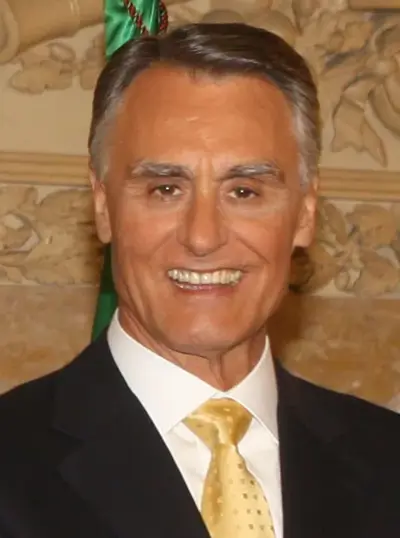
Aníbal António Cavaco Silva, GCC, GColL, is an economist who was the 19th President of Portugal, in office from 9 March 2006 to 9 March 2016. He had been previously Prime Minister of Portugal from 6 November 1985 to 28 October 1995. His 10-year tenure was the longest of any prime minister since António de Oliveira Salazar, and he was the first Portuguese prime minister to win an absolute parliamentary majority under the current constitutional system. He is best known for leading Portugal into the European Union.
