Isoroku Yamamoto Quotes
A war with so little chance of success should not be fought.
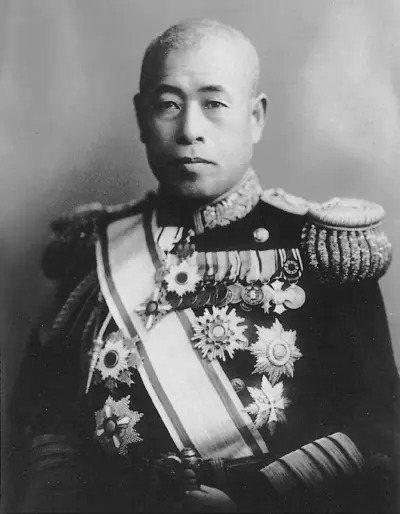
The Admiral had spent time in the United States. He strongly opposed Japanese warring against America. When his recommendations, were rejected and war was decided upon, Yamamoto planned and commanded the Attack on Pearl Harbor.
Isoroku Yamamoto, 1884-1943, Japanese Admiral, Commander in Chief of the Japanese Navy Quoted in Eri Hotta, Japan 1941: Countdown to Infamy
Sourced by: Eigen's Political and Historical Quotations


He was describing a meeting that he and General Marshall had conducted with FDR, Secretary of State Cordell Hull and others. In less than two weeks, the Japanese would attack Pearl Harbor without any declaration of war, as Marshall had predicted.

Some say that President Roosevelt had instructed the war department to issue warnings to the military forces in the Philippines and the Pacific. Military intelligence argued against the Japanese attack on the Philippines—and did not think any attack anywhere very likely. When the president insisted, warnings went out and this is what was sent to General Short. The warning was ambiguous and Short did very little and was caught unprepared shortly thereafter. How much reliance should be placed on intelligence estimates has been a question that has been argued before World War II and after.


President Roosevelt and Secretary of state Cordell hull felt that a Japanese invasion of the Philippines was a likelihood. The army chief of staff disagreed citing his intelligence reports. Japan of course attacked Pearl Harbor and then invaded the Philippines. Marshall, perhaps America’s greatest military administrator, turned out to be wrong while the President and Secretary of State proved more accurate in their assesment of the Japanese threat. This quotation stands as a testament to the fact that the intelligence fiascoes of the Iraq war are not unique in American military history.


Under the Jay Peace Treaty for the American Revolution, the Iroquois were recognized as an Independent Nation. (5 of the tribes fought for the British and 1 for the Colonists which is why the Iroquois were one of the subjects of the peace treaty. In 1942. the Iroquois wanted to maintain their own sovereignty and so they made their own declaration of war in WWII. Then Iroquois men then enlisted in the American Armed Forces. The Iroquois had made their own separate Declaration of War in WWI as well.

During WWII, Mauldin was at the front lines and in the fox holes with the troops getting ideas for his cartoons most of which were drawn on the battle field;

Halsey was a big supporter of the use of the Atom Bomb against Japan. His ships had battled the Japanese navy from Pearl Harbor to Japan’s eventual surrender and had seen the cruelty of the Japanese occupation and aggression throughout the Pacific. His ships were the first to be sunk by Kamikaze suicide pilots at the Battle of Leyte Gulf where over 3000 American sailors were killed in the battle that finally destroyed the Japanese Navy’s ability to wage war.


There was much political Japanese opposition to attacking the United States. Most military judgments were that Japan could not win such a war. The militarist hawks in the Japanese leadership argued that while Japan might not be able to defeat the U. S., Japan could not be defeated in the Pacific. And the U. S. would not spend the money to rebuild their navy of the Japanese could destroy most of the capital ships with surprise attack. Therefore starting a war might provide the opportunity to negotiate for more favorable terms and less pressure, boycotting, and castigation of Japan by the United States and they could come out with control of a number of lands of the Pacific. However, the Naval Chief of Staff told the Emperor that war ight be inevitable as America or Great Britain might attack one of the Japanese held territories and force Japan into war. Later, the Japanese conservatives and Militarist hawks, were able to purge opponents of war from the Cabinet, and when they had control of the government, convinced the Emperor to flip flop, and started WWII with the Attack on Pearl Harbor.

Sherman had friends in the South and he saw rebellion and war coming. Most Southerners had a romanticized view of war and were so wrapped up in trying to preserve their economic and cultural way of life that they did not think through the implications of such a war. After and during the war, Sherman was particularly angry with the Southerners who had brought such terrible casualties and destruction upon the land and its people and he was the leader of the March through Georgiam the most effective and humiliating campaign against the South.
Japanese military culture of the time was that a soldier who surrendered, even if wounded, was totally dishonorable and therefore could be abused and killed. The American marines then retaliated, and after that, the Americans also took no live prisoners contrary to American military regulations. This incident shows how difficult it is to maintain military professional standards and regulations if the other side does not. Similar situations existed in most American wars, but by the end of the 20th century, the all volunteer military had become much more professionalized and disciplined, and there were relatively few American atrocities despite many provocations.


Martel’s strategy was to allow the Saracen invaders to take a few towns and accumulate plenty of booty. This would slow them down as an army, and many of the individual soldiers was carrying looted goods of one kind or another.

Some scholars look back at the allied bombing of German Cities in WWII with criticism that it was morally improper to bomb populated cities, and that the use of the adjective “exterminating” indicated that Churchill was more interested in killing Germans than strategic victory. This revisionist history has two failings. First, the Germans had already bombed Coventry, London and other civilian targets in England as well as cities in Holland, Poland and other countries killing many civilians. As a result, under the rules of war, Germany was no longer entitled to protection for their cities. Further, Hamburg and other targets were manufacturing sites of war material and as such lost the protection anyway. Even Dresden, which had very little war manufacturing was the main location for R&R of German Officers and by their military presence in the city converted it into a legitimate target. FDR agreed with Churchill, that the bombing was a good strategy to cause Hitler to fall as they thought the public would rebel. They were wrong however and his grip on the population through the Gestapo and the military was so strong that, it took a land invasion and occupation to put an end to Hitler. However, the devastating bombing all but crippled the German weapons development and deployment. For example. The Germans had developed the Jet Airplane Engine and actually put a few in the fight at the end if the war. Without the bombing, they would have had many more and countered the allied air supremacy. However, it is also true that Churchill and many Englishmen and some Americans believed that the English were morally entitled to retaliation for the innocent civilians killed with the German bombing of civilian targets.


of the German tactics of Blitzkrieg Goering, Hitler and the other leading Nazis were quite open about their military aggression. Terrorism was admittedly used to persuade the next nation Germany would attack to capitulate rapidly.

MacArthur was not difficult and unaccepting of higher authority just in the Korean War. He was dissatisfied with American strategy in WWII. He was very unhappy with the decision that placed defeat of Germany and Hitler as a higher priority than his defeat of Japan. He perceived himself as the most qualified and senior American military man and resented the fact that others were making the big strategic decisions and not acceding to his views sufficiently. Also, Dwight Eisenhower had been appointed as Supreme Commander of the European Front which had the highest priority. MacArthur, a man with a huge ego, saw Eisenhower, who had served under MacArthur earlier, as a competent “junior” officer. See {605728} for insight into has view of Eisenhower. While it was certainly true that if given more gasoline, men and armaments, McArthur could have done more and faster, it would have to be taken from the effort to subjugate Germany which would have had to slow down.

Germany had some world class physicists. Our scientists, military intelligence people, and political leadership assumed that the Germans were also seeking to develop the Atomic Bomb. Ironically, it turned out that they were not, and what Truman reported in this quotation was untrue (although that was not fully known at the time.) Einstein and several of the scientists who were early pioneers in modern physics were Jewish, and Hitler referred to the study of nuclear fission and fusion as “Jewish Science.” As a result, the German government did not commit the resources to the development of an atomic bomb. Instead, they were betting on the development of the Jet Airplane which they succeeded in deploying against the Allies at the end of the war. But they did not have enough or enough pilots left alive to fly them, and Germany was overrun by the Allied Troops. Prior to Truman’s erroneous report about the German development of an atomic bomb, there had only been one piece of evidence that the Germans were not developing one. An OSS secret agent, Moe Berg, had talked with Werner Heisenberg, at a Swiss scientific conference during the war. He was going to assassinate the greatest of the German physicists if Berg thought he was working on a nuclear device. Berg concluded from his discussions that Heisenberg did not know enough about nuclear fission to have been working on that. Berg did not kill Heisenberg, and reported that he did not think the Germans were developing a bomb as if they were Heisenberg would have been deeply involved. However, the American intelligence people and the American scientists, did not trust Berg’s analysis and conclusion. Berg was not a trained scientist. He was a professional baseball player—the NY Yankee backup catcher to Bill Dickey. He was a college graduate, a brilliant guy and a very fast learner who had studied physics books and papers before his assignment. Berg turned out to have been right, but that was not confirmed until a few years after the war. Truman had relied on an incorrect intelligence estimate when he made this quotation. It was not the first such error of intelligence analysis in American history and it would not be the last.
World War I World War II
