Jose Marti Quotes
A nation is not a complex of wheels, nor a wild horse race, but a stride upward concerted by real men.
Jose Marti, 1853-1895, Cuban Revolutionary Leader, A Glance at the North American's Soul Today, 1886
Sourced by: Eigen's Political and Historical Quotations


This is a remarkable quotation. Here was a leading minister of the Established Church of England who is arguing that there should be no established church insofar as religious belief is concerned. Essentially this is what England has developed. The Anglican Church is still the established church but only for purposes of state cerimonies and the religion of the Royal Family. The establishment has nothing to do with lawmaking, or common religious belief or inhibition of the many other religions in England and there is complete freedom of conscience.

She was shot in the head in a mass shooting which killed one of her closest staff members, She made a remarkable recovery and rehabilitation but decided to resign so she could devote her energy to her rehabilitation. After Congress she did that and gave her effort to Americans for Responsible Solutions, an organization to try and reduce mass shootings.

See {640107} for another quotation creating this so called union. It made great sense to the King, but little to the Poles and Lithuanians who each saw themselves as a very different people and wanted little to so with the other.

Even in modern times many politicians the world over agree with Davis’s point that for a government to function well, the nation must have a homogenous citizenship. This is especially true of dictatorships where control of a uniform culture and populous is easier than if it is diverse nation. In modern times, the three greatest economic and scientific powers, the United States, The Soviet Union, and China were and are multicultural societies with different ethnicities, races, religions, and cultures among their sitizenry.
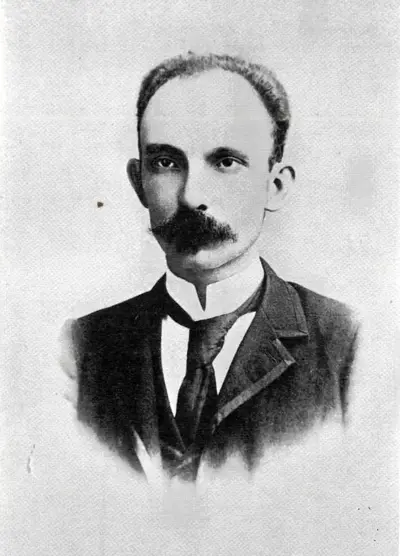
José Julián Martí Pérez was a Cuban poet, philosopher, essayist, journalist, translator, professor, and publisher, who is considered a Cuban national hero because of his role in the liberation of his country. He was also an important figure in Latin American literature. He was very politically active and is considered an important revolutionary philosopher and political theorist. Through his writings and political activity, he became a symbol of Cuba's bid for independence from the Spanish Empire in the 19th century, and is referred to as the "Apostle of Cuban Independence". From adolescence, he dedicated his life to the promotion of liberty, political independence for Cuba, and intellectual independence for all Spanish Americans; his death was used as a cry for Cuban independence from Spain by both the Cuban revolutionaries and those Cubans previously reluctant to start a revolt.
