Ron Paul Quotes
1913 wasn't a very good year. 1913 gave us the income tax, the 16th amendment and the IRS.
Paul, Ron. End the Fed. Grand Central Publishing, 2009.


There are many who would disagree with Presti’s description, while many others have this as a chief complaint. The agency tends to change from administration to administration as to its policies and collection methods. In the decades since this criticism, the agency has changed a good deal. However, there are great differences between IRS practices in different parts of the country, some of which are better than the others. One of the major problems of the IRS is the conflict between collecting taxes that should have been paid and were not and ruining the business or individual that committed the offense by taking current working capital. Congress has NEVER weighed in on this question preferring to let the Civil Servants take the heat.


In 1975 the House was debating a law that would prohibit pay toilets in federal buildings.


At the time, he, th richest man in America was paying a lower ta rate than his secretary, his employees and the waiter who served him lunch. The “Buffet Rule” was developed and named for him that said that wealthy people should pay a minimum rate of taxation regardless of tax credits, deductions and other means of tax avoidance.


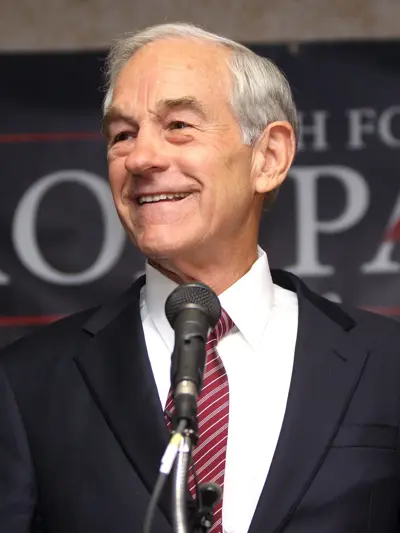
Ronald Ernest Paul is an American author, physician, and retired politician who served as the U.S. Representative for Texas's 22nd congressional district from 1976 to 1977 and again from 1979 to 1985, and for Texas's 14th congressional district from 1997 to 2013. On three occasions, he sought the presidency of the United States: as the Libertarian Party nominee in 1988 and as a candidate for the Republican Party in 2008 and 2012. A self-described constitutionalist, Paul is a critic of the federal government's fiscal policies, especially the existence of the Federal Reserve and the tax policy, as well as the military–industrial complex, the war on drugs, and the war on terror. He has also been a vocal critic of mass surveillance policies such as the USA PATRIOT Act and the NSA surveillance programs. He was the first chairman of the conservative PAC Citizens for a Sound Economy, a free-market group focused on limited government, and has been characterized as the "intellectual godfather" of the Tea Party movement, a fiscally conservative political movement that is largely against most matters of interventionism.
