It's really impressive what those like Messner and Walter Bonatti have done - they are a big part of the history of alpinism.
You're progressing on something and that's what it's all about. You wanna keep moving, having a progress in your life.
When you get to the summit and you push the watch, first you try to breath a little bit and get some oxygen in your lungs. When I saw this time I was like, 'Ah, that's not possible.' Yeah...that was a good moment.
Slow down and stay alive.
My first climb was on lead; there were pitons, no bolts.
You just see your hands, your ice axe, and your crampons...and they have to just move.
I don't worry about other people, and I don't let them influence me too much. I try to find out what I want to do and not what other people want me to do.
Of course I climbed Everest without oxygen, but it's not the end of the story for me. The summit itself is not what counts. It's how'd you get there, what'd you climb, and there are really great opportunities to climb on this mountain. It's a beautiful place.
Right now, I'm just focused on the 8,000-meter peaks. I don't know what's next. I don't think I will get tired of climbing.
I don't cheat.
Not all Sherpas are bad. There are a few who are crazy, but the rest are good people.
Everest is how it is right now. We have to fix ropes up there; we have the commercial expeditions. If you don't like that, go on another mountain or choose another part of the mountain. There's still space for everybody.
The goal is not to solo. Of course, it is possible to move fast in alpine style also with a partner. I just need the right partner.
During the climb, I never get afraid. But you can't lose your fear - it is really important. If you lose it, you are going to die.
It's like a living process. You start out, and you see the Eiger north face, and you think, 'That's impossible.' Then you start to dream. Then you climb the Eiger north face. Then maybe you go to the Himalaya.
I never expected to make a living from climbing, but it got to the point where I either had to get a job or start trying to make some real money from it. I didn't want to be 45 and a dirtbag.
Everybody has to choose his or her own way to climb a mountain. I don't give an opinion. But there needs to be enough room for others.
Today, to find a challenge is really hard. In the Alps, everything is done. The new lines, almost all of them are finished. So to find a new challenge, it's all beginning to go to speed.
These guys make a lot of money. Of course it's hard and dangerous work, but Sherpas are the rich people in Nepal. If you make so much money, you can somehow lose reality.
Annapurna was a special situation. It was a lifetime dream to finish that route. When I started climbing the South Face, I really expected not to come back alive.
I don't like being restricted. When I climb, I feel free and unrestricted; away from any social commitments.
No one in Switzerland knows me as the Swiss Machine, and that's good, because I don't like it.
I'm getting older, turning 40 this year. I had a period where I thought each expedition had to be something harder, something faster. But you can't go on like that, or you're going to die.
When you go to the mountains, you really have to accept that there is always a risk. It's more dangerous than sitting at home watching TV. It's really sad.
Once you start, if you're still afraid, don't do it. Either it's too hard, or you're not prepared. I've never done something when I was scared.
I don't need to come back to Everest.
I don't like talking about climbing that much. You don't have to discuss; just do it.
I don't have a death wish. On the contrary, I'm hanging onto my life like never before.
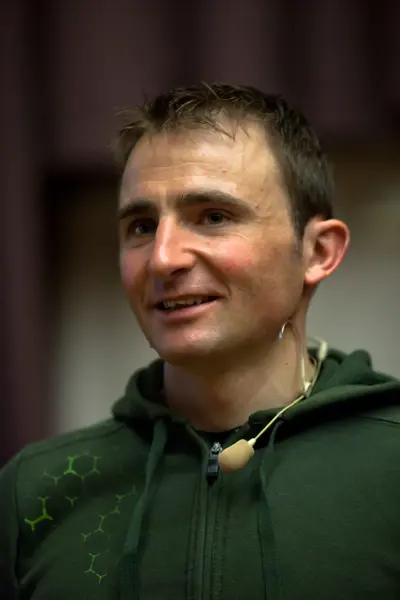
Ueli Steck was a Swiss rock climber and mountaineer.