TIBERIUS SEMPRONIUS GRACCHUS
The notion that public lands should be available for the grazing of private herds of animals is very old. Note that the Roman law expressly forbade the collection of fees for grazing rights. The reasoning was that virtually all free Romans had animals that needed grazing and pasture land. So all citizens could take advantage of the public facility. As society became more industrialized and specialized, the percentage of citizens who could benefit reduced over time until there became less than 1 percent of citizens who could benefit from a asset that was paid for and maintained by all citizens. Then there was a rationale for charging user fees.
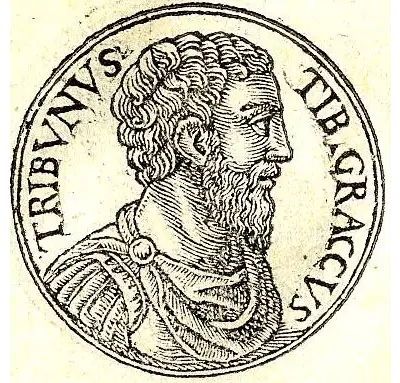
Tiberius Sempronius Gracchus (163/162–133 BC) was a populist Roman politician best known for his agrarian reform law entailing the transfer of land from the Roman state and wealthy landowners to poorer citizens. Against stiff opposition in the aristocratic Senate, this legislation was carried through during his term as tribune of the plebs in 133 BC. Fears of Tiberius's populist programme, as well as his uncompromising behavior, led to him being killed, along with many supporters, in a riot instigated by his senatorial enemies. A decade later his younger brother Gaius attempted similar legislation and suffered a similar fate.
