OWEN LATTIMORE
The great wall of China was built just as much to keep the Chinese in as to keep the barbarians out.
The Chinese 1st Emperor had unified China by brutal war. His troops and government were more sophisticated than the others and they were particularly sophisticated about drafting soldiers, forcing the civilian population to manufacture weapons for the huge military and to levy and collect taxes. Many people in the conquered provinces fled from China. The Emperor responded to the outside ‘barbarians’ and the fleeing Chinese by connecting the many walls that existed on the Chinese border into one unified wall as much to keep his labor force in China as to keep others out.
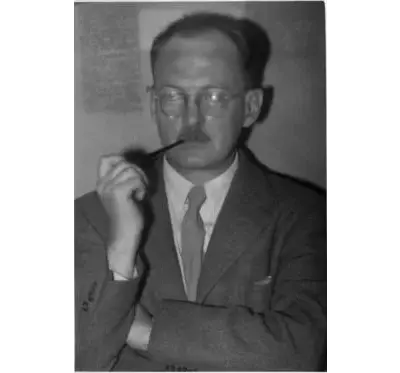
Owen Lattimore was an American author, educator, and influential scholar of China and Central Asia, especially Mongolia. Although he never earned a college degree, in the 1930s he was editor of Pacific Affairs, a journal published by the Institute of Pacific Relations, and then taught at Johns Hopkins University in Baltimore, Maryland, from 1938 to 1963. During World War II, he was an advisor to Chiang Kai-shek and the American government and contributed extensively to the public debate on American policy in Asia. From 1963 to 1970, Lattimore was the first Professor of Chinese Studies at the University of Leeds in England.
