NAZI PARTY
(National Socialist German Workers' Party)
This platform was not very different from those of many democratic political parties at the time. It was on this sort of basis that the German Nazis were elected. However the last sentence of this quotation turned out to be the undoing of the German people and most other people throughout Europe. The “common good” always was interpreted to be the good of the Nazi government which had been elected as against the individual god—the rights of the individual. Soon the state had all the rights and individuals, none. And no other political force could contest and election as that was not in the interest of the common weal.
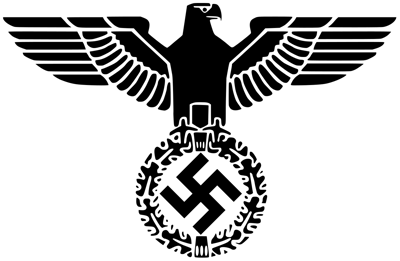
The Nazi Party, officially the National Socialist German Workers' Party (German: Nationalsozialistische Deutsche Arbeiterpartei or NSDAP), was a far-right political party in Germany active between 1920 and 1945, that created and supported the ideology of Nazism. Its precursor, the German Workers' Party (Deutsche Arbeiterpartei; DAP), existed from 1919 to 1920. The Nazi Party emerged from the German nationalist, racist and populist Freikorps paramilitary culture, which fought against the communist uprisings in post-World War I Germany. The party was created to draw workers away from communism and into völkisch nationalism. Initially, Nazi political strategy focused on anti-big business, anti-bourgeois, and anti-capitalist rhetoric, although this was later downplayed to gain the support of business leaders, and in the 1930s the party's main focus shifted to antisemitic and anti-Marxist themes.
