MAHENDRA CHAUDHRY
(Mahendra Pal Chaudhry)
Fiji had undergone a succession of coups and the unstable political situation and the ethnic strife had caused man of the educated young people to emigrate. This “brain drain” is common in many third world countries.
He was opposed to the existing Fijian constitution but could not muster enough political support to amend it. He therefore stated that he would ignore it. He was overthrown by a coup several weeks later. One provision that was particularly vexing to him was communal voting, which reserved almost two-thirds of the seats in the House of Representatives for persons registered on ethnic electoral rolls; this tended to polarize the nation and gave foundation to politicians with extreme views
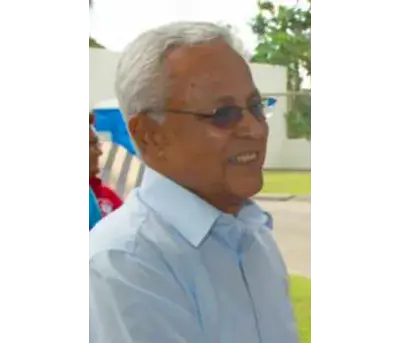
The Rt. Hon. Mahendra Pal Chaudhry is a Fijian and the leader of the Fiji Labour Party. Following a historic election in which he defeated the long-time former leader, Sitiveni Rabuka, the former trade union leader became Fiji's first Indo-Fijian Prime Minister on 19 May 1999, but exactly one year later, on 19 May 2000 he and most of his Cabinet were taken hostage by coup leader George Speight, in the Fiji coup of 2000. Unable to exercise his duties, he and his ministers were sacked by President Ratu Sir Kamisese Mara on 27 May; Mara intended to assume emergency powers himself but was himself deposed by the military leader, Commodore Frank Bainimarama. After 56 days in captivity, Chaudhry was released on 13 July and subsequently embarked on a tour of the world to rally support. He was one of the leading voices raised in opposition to the Qarase government's proposed Reconciliation and Unity Commission, which he said was just a mechanism to grant amnesty to persons guilty of coup-related offences. In January 2007 he was appointed as Minister of Finance, Sugar Reform Public Enterprise and National Planning in the interim Cabinet of Commodore Frank Bainimarama, following another coup. Chaudhry was also co-chair of the task force focusing on economic growth within the National Council for Building a Better Fiji. In August 2008, he left the government and became an outspoken critic of it.
