ERNST MACH
(Ernst Waldfried Josef Wenzel Mach)
This quotation illustrates a facet of science that often affects politics. At the time there had been much new information that tended to give more and more support to the notion of the atom. Most physics were by then convinced that there were atoms and that they seemed to behave just like Newton’s laws predicted that all bodies would. Mach however, would not even accept the fact that atoms really existed. He was not just any scientist but one of the better and more prestigious physicists in the world. New ideas are rarely accepted by all, even in the scientific disciplines. In the late 20th century scientific evidence began to be amassed indicating that there was global warming and a significant part of it was man made. As the data kept accumulating and the results of studies were understood, the vast majority of scientists became convinced about global warming. But there were a few who did not think that there was yet sufficient evidence to reach that conclusion, just as Mach was in 1897 convinced that there the atoms existence had not been demonstrated and in his judgment he did not think that atoms were a reasonable explanation of the physical world. But the fact that he had not yet become convinced should be examined by policy makers and juxtaposed against the reasons and the evidence by the other scientists. He might have been right; however he was not. The global warming nay sayers might be right, but with each passing day, the likelihood becomes less as more evidence is aggregated and analyzed.
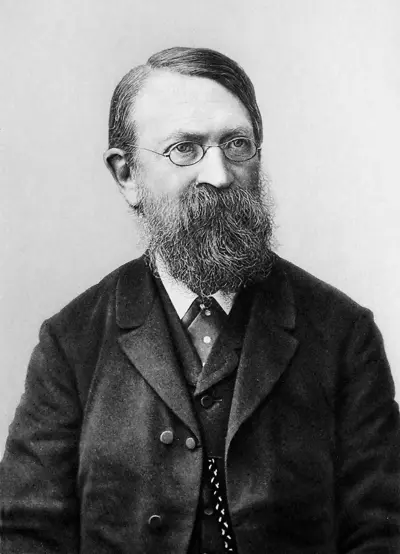
Ernst Waldfried Josef Wenzel Mach was an Austrian physicist and philosopher, noted for his contributions to physics such as the study of shock waves. The ratio of one's speed to that of sound is named the Mach number in his honour. As a philosopher of science, he was a major influence on logical positivism and American pragmatism. Through his criticism of Newton's theories of space and time, he foreshadowed Einstein's theory of relativity.
