COLLIS POTTER HUNTINGTON
(Collis P. Huntington)
Huntington and many others regularly bribed state legislators as well as members of Congress.
Huntington classified the 1876 Senate into 3 categories. 'Clean' were those who voted his way but required no bribes. 'Commercial' voted his way but needed fiscal incentive. 'Communists' were those Senators who opposed his legislative agenda.
$200,000 then was the equivalent of well over $10 million today, and this is about what it costs a company in lobbyists fees and Congressional Campaign Contributions to get a bill passed in the current political environment.
Bribing Congressmen was quite common. In those days, money to Congressmen and Senators was not even disguised as campaign contributions. The letters were the short terms for the different agents.
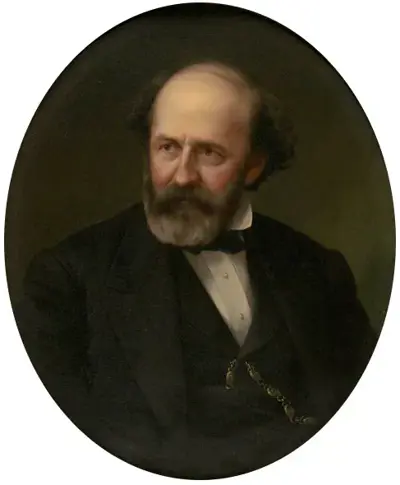
Collis Potter Huntington was an American industrialist and railway magnate. He was one of the Big Four of western railroading (along with Leland Stanford, Mark Hopkins, and Charles Crocker) who invested in Theodore Judah's idea to build the Central Pacific Railroad as part of the first U.S. transcontinental railroad. Huntington helped lead and develop other major interstate lines, such as the Southern Pacific Railroad and the Chesapeake & Ohio Railway (C&O), which he was recruited to help complete. The C&O, completed in 1873, fulfilled a long-held dream of Virginians of a rail link from the James River at Richmond to the Ohio River Valley. The new railroad facilities adjacent to the river there resulted in expansion of the former small town of Guyandotte, West Virginia into part of a new city which was named Huntington in his honor.
