AUGUSTIN-JEAN FRESNEL
This quotation illustrates and important aspect of science. Specifically, that theory, something ephemeral and impractical to the layman, has immense practical power in developing great scientific and technological breakthroughs. The result of this breakthrough was large lenses that could make lights more powerful and make lighthouses much more safe. Even the atomic bomb was really developed from theory and then engineered for practical use.
Leadership is a skill that has eluded many of the most brilliant people in the world. Science is one of the most difficult environments in which to exercise leadership. By nature authority comes from logic and observation and not structure or position. Yet large scientific projects need some kind of organization and management.
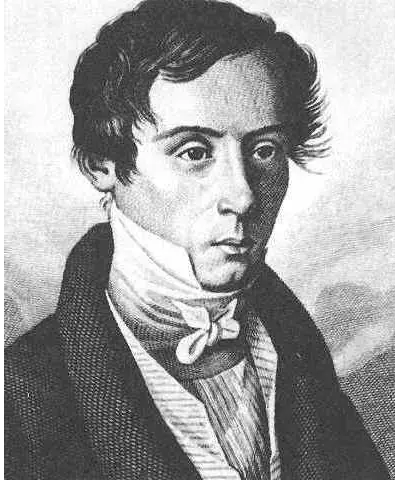
Augustin-Jean Fresnel was a French civil engineer and physicist whose research in optics led to the almost unanimous acceptance of the wave theory of light, excluding any remnant of Newton's corpuscular theory, from the late 1830s until the end of the 19th century. He is perhaps better known for inventing the catadioptric (reflective/refractive) Fresnel lens and for pioneering the use of "stepped" lenses to extend the visibility of lighthouses, saving countless lives at sea. The simpler dioptric (purely refractive) stepped lens, first proposed by Count Buffon and independently reinvented by Fresnel, is used in screen magnifiers and in condenser lenses for overhead projectors.
