Joseph Stiglitz Quotes
You can't overestimate what happens when you encourage regulators to believe that the goal of regulation is not to regulate.
Stiglitz, Joseph E. Freefall: America, Free Markets, and the Sinking of the World Economy. W. W. Norton & Company, 2010.


in the Meltdown of 2008 Gramm was one of the most ideological deregulators in Congress. As the Meltdown of 2008 hit, he immediately made this statement when few people even knew the extent of what had happened, much less why it happened. Gramm’s instant absolution of deregulation as one of the causes is a classic case of denial. There were few economic issues of controversy that did not contribute to the totality of causes. And a few years later Gramm was one of the very few ideologues who still believed that deregulation did not have a role in the Meltdown and the Great Recession that followed. For a contrast from the expert in his own party, see {638023}.


Federal rulemaking is a complicated arcane process as a result of Congress making it harder for Federal agencies to make rules. Although Congress could legislate any rules, many members prefer not to go on ecord as supporting some rules. Others watch what the public reaction is and if good, they support it and take credit and if bad, they complain of the "overreach of unelected bureaucrats". However, they do not want rulemaking to be fast or efficient; they want the time to decide where they stand. IN 2017 The incomming Trump Administration wanted to repeal many of the Federal Rules that had been made in the previous Obama Administration. However Trump and his team was not very experienced politically and ran against the politicians. They were surprised that it was as hard to repeal Federal Rules as it was to make them in the first place as this quotation explained


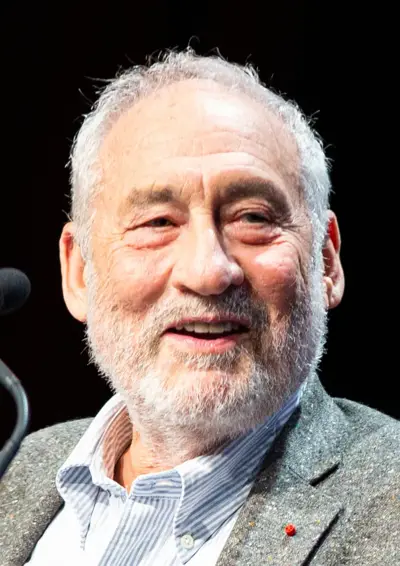
Joseph Eugene Stiglitz is an American economist, public policy analyst, and a professor at Columbia University. He is a recipient of the Nobel Memorial Prize in Economic Sciences (2001) and the John Bates Clark Medal (1979). He is a former senior vice president and chief economist of the World Bank and is a former member and chairman of the (US president's) Council of Economic Advisers. He is known for his support of Georgist public finance theory and for his critical view of the management of globalization, of laissez-faire economists (whom he calls "free-market fundamentalists"), and of international institutions such as the International Monetary Fund and the World Bank.
