Jiichiro Matsumoto Quotes
Why must I imitate the sideways walk of a crab? … Hasn’t he [Emperor Hirohito] become human?
In 1948 Japanese Emperor Hirohito convened the Japanese Diet. By tradition the Emperor would receive the bows and homage of the leaders of the upper and lower houses in a special audience room before the ceremony. Matsumoto did not so greet Hirohito provoking a scandal of sorts. However, in the past, Hirohito had been worshipped as a living God. When his subjects attended an audience, they would bow low and leave walking backwards or sideways so as never to insult the Emperor be showing him their backs. The court maneuver was known as the “crab walk.’ However, under the 1946 Constitution the Emperor had become a mortal, human “symbol” of the state. Matsumoto was purged from politics with the active assistance of the American Occupation authorities. No one was willing to take the new Constitution both literally and seriously.
Jiichiro Matsumoto, *, Vice President of the Japanese House of Councillors, Statement to critics, January 1948
Sourced by: Eigen's Political and Historical Quotations


To this day, Japanese are generally very circumspect about criticizing the emperor and he is rarely the subject of public discussion.

This testimony turned out to be a tactical error. The main purpose of Tojo was to protect Emperor Hirohito from responsibility for the war. See {587277}. But by admitting that he never disobeyed even the Emperor’s wishes, he made it clear that he had implemented the Emperor’s desired policies. Therefore, Hirohito must have been responsible. After this testimony there was some delay and he changed his testimony claiming that once he disobeyed the Emperor when he took the nation to war. Few believed this second version, but it was sufficient to keep Hirohito from being charged—which despite many calls for his trial, General MacArthur also did not want the Emperor brought to account as the institution was making the occupation of Japan very easy.


Explaining one of the major advantages of energy independence.


There was a social custom amongst the wealthy women of early American society where if they were moving to a new town, they would present their cards to the established female residents, who would then visit the newcomer at her home. Dolley Madison, anxious to bring some social civilization to Washington, still a rough swamp area, went out of her way to visit all comers and the Cabinet (Department) wives then did the same. However, as the government and Washington grew, this became more and more difficult, and subsequent first ladies wanted more of their privacy and time devoted to family. As America grew in importance, more counties sent ambassadors to Washington, and their wives all expected to be visited and invited. See {620648} for more on the “obligations” of a first lady and cabinet wives.
The Emperor and many Japanese did not want foreign trading missions in the country. (see {613126}.) The problem at the time had nothing to do with the potential economic effects of trade on domestic industry or balance of payments, but for the Japanese was strictly a cultural problem. They were in great fear of what today some call “cultural imperialism”--the adoption of a foreign culture. The Japanese had been so fearful of cultural influence of foreigners that when some Japanese fishermen’s boat had been sunk and they had been rescued by foreign seamen and returned to Japan, they were executed as they had been “contaminated” and could “contaminate” the rest of the population. The government was in disarray ({613125}) and the military did not feel strong enough to take on the foreigners. Jiro was whipping up public opinion. He himself was decapitated by the government and his head exhibited as an example.

Even some who bought the party line that the Emperor had personally not started the war or the other incursions, blamed the Emperor for his inaction.

The evidence pointed to the Emperor as being guilty of being responsible for war crimes. There were many who wanted to try the Emperor and if found guilty hang him. MacArthur was opposed to a trial for the Emperor as the practical consequence of a guilty verdict was too detrimental to his orderly occupation. The General’s view eventually prevailed, but only after material evidence and facts were withheld from Washington.


Those who have fought against dictatorial governments for their basic human rights, found after victory and the overthrow of the dictator, that there was another force fighting for control which would deny citizens human rights based on a theocracy. They wanted the end of the dictator so they could use their interpretation of a religion as the excuse to deny all citizens basic human rights.


5th Marquis of Lansdowne. Nicholas II was very indecisive and was very easily persuadable.

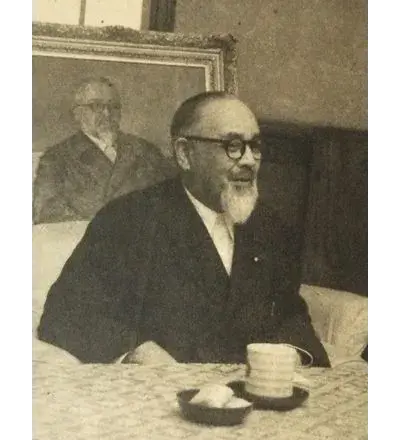
Jiichirō Matsumoto (松本 治一郎, Matsumoto Jiichirō) (November 22, 1966) was a Japanese politician, businessman, and leader of the Burakumin liberation movement. Born in Fukuoka Prefecture, Matsumoto led the Burakumin liberation movement during its activity, earning himself the title "Father of the Buraku Liberation" from the Buraku Liberation League.
