Aurangzeb Quotes
Whoever of my fortunate sons shall chance to rule my empire?
He left no other reference to the line of succession. After his death, his sons fought it out unsuccessfully and the Mogul Empire fell apart.
Aurangzeb, 1618–1707, Mogul Emperor of India, From his will
Sourced by: Eigen's Political and Historical Quotations

He had tripled the size of Rus, pulling together the disparate areas which had been under the thrall of the Golden Horde. The custom was when the Grand Prince died he left parts of his dominion to each of his sons and grandsons. However. Ivan changed that pattern and wanted one son to be the ruler over all of what was becoming a large unified state. After that his pattern was followed by all the Czars until the Russian Communist Revolution in 1917." Ivan the Great

This treaty was an attempt to end the 100 Years War.


The king would often walk alone or with only a few companions. His brother expressed concern about exposing the royal person to risk.


Bartolo was the most famous legal expert of his day and for many years thereafter as he died at the age of 44—the height of his career. In Italy, Spain and other nations of Europe there were statutes passed that said if there was no precedent in Roman Law, the writings of Bartolo should dictate the law.

King Henry VII had only 1 son, Edward who became king at age 9. But at the age 15 he became very ill and died with no children. Before his death however, Mary who would normally have been the next in line was a Catholic and Northumberland, the head of the Privy Counselor, and father of Jane’s Husband arranged for Edward to change his will before he died. Jane Grey riled for 9 days. Parliament then made Mary the Queen.


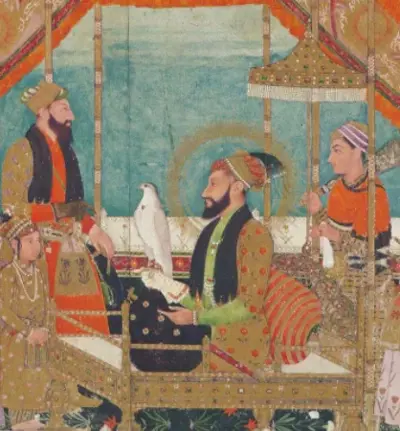
Muhi-ud-Din Muhammad, commonly known by the sobriquet Aurangzeb (Persian: "Ornament of the Throne") or by his regnal title Alamgir (Persian: "Conqueror of the World"), was the sixth Mughal emperor, who ruled over almost the entire Indian subcontinent for a period of 49 years. Widely considered to be the last effective ruler of the Mughal Empire, Aurangzeb compiled the Fatawa-e-Alamgiri, and was among the few monarchs to have fully established Sharia law and Islamic economics throughout the Indian subcontinent. He was an accomplished military leader whose rule has been the subject of praise, though he has also been described as the most controversial ruler in Indian history.
