Henry David Thoreau Quotes
Whether he sleeps or wakes,--whether he runs or walks,--whether he uses a microscope or a telescope, or his naked eye,--a man never discovers anything, never overtakes anything, or leaves anything behind, but himself. Whatever he says or does, he merely reports himself. If he is in love, he loves; if he is in heaven, he enjoys; if he is in hell, he suffers. It is his condition that determines his locality.
Thoreau, Henry David. The Journal of Henry D. Thoreau, 1837-1861. Edited by Bradford Torrey and Francis H. Allen, Houghton Mifflin, 1906.


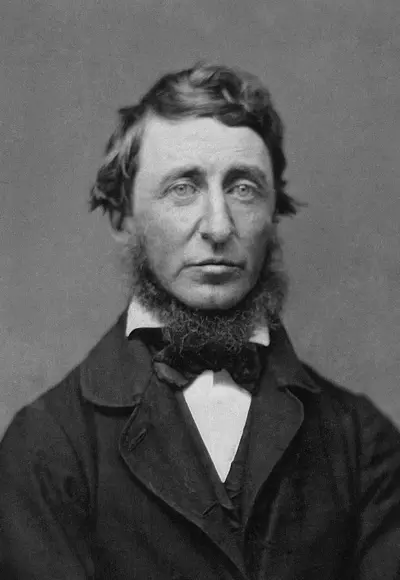
Henry David Thoreau was an American naturalist, essayist, poet, and philosopher. A leading transcendentalist, he is best known for his book Walden, a reflection upon simple living in natural surroundings, and his essay "Civil Disobedience" (originally published as "Resistance to Civil Government"), an argument for disobedience to an unjust state.
