Roman Dmowski Quotes
Wherever we can multiply our forces and our civilizational efforts, absorbing other elements, no law can prohibit us from doing so, as such actions are our duty.
Roman Dmowski, 1864–1939, Polish Politician & Co-Founder of the Right Wing Endecja Fascist Movement, Justification of Expansionism & Aggression, Quoted in Oleksandr Derhachov (editor), "Ukrainian Statehood in the Twentieth Century: Historical and Political Analysis
Sourced by: Eigen's Political and Historical Quotations


The King was asking for volunteers for the British Army. What is particularly interesting about this quote is the overt appeal to “men of all classes.” This illustrates that there was an extensive class system then operational in Britain. Almost all people knew to which class they belonged. A very popular King could then make a statement like this and no one was critical of his referring to citizens by class distinctions. Even in modern times, Britain is a more class conscious society than America. The response to this appeal was very good, but the First World War developed in such a way that huge manpower resources were needed and the King had to reluctantly assent to a military draft 7 months later.

This was the address where FDR used the “arsenal of democracy” phrase which became so famous. A similar phrase was used in May by Robert E. Sherwood--{624748}. Then Jean Monnet began to use the exact phrase in Mid 1940--{624746}. He almost certainly had read Sherwood’s earlier, similar phrase. However so had Presidential Aid Harry Hopkins who thought that it would be a good phrase for President Roosevelt to use to “brand” the activity of the United States. So diplomatically, Monnet was asked not to use the phrase any more, and he acceded to the request. At the end of the year, FDR gave his address with this quotation.

The Chinese were massacred when the Japanese invaded with atrocities against civilians that were inconceivable until Hitler began his in Europe. However, there were many Chinese we worked against the Japanese including the Communists who made a truce with Chiang (see {636322}) so that they could oust the Japanese invaders.


He persuaded many other rulers to join the Indian Union when India became Independent.


In one of the most unusual revolutions in world history, Brazil became independent from Portugal via a revolution led by the son of the Portuguese King and heir to the throne, Pedro I. The crown prince of Portugal, led Brazil in her breakaway from Portugal and by popular acclaim became Pedro I, Emperor of Brazil. He is probably the only monarch in history who was the heredity monarch of one kingdom and selected by popular acclaim to the throne of another.

The major purpose of the Black Hand was to create a single empire of ‘Greater Serbia’---a nation uniting all people of Serb extraction throughout Europe and the Balkans. They wanted to combine the lands where ethnic Serbs lived regardless of what other nation the land was a part of.

Karsh was arguing that Arab citizens of Israel should be required to serve in the Israeli army and fight against other Arabs who have repeatedly attacked Israel. The Israeli tradition has been not to require Arab citizens to fight against what might be their own relatives. Karsh and others argue that Italian-Americans fought against other Italians in WWII, German-Americans fought against Germans.


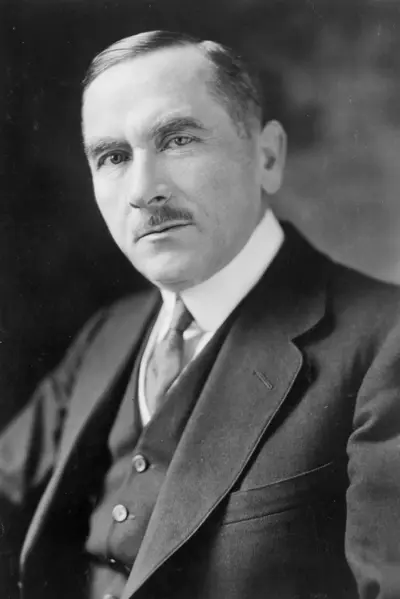
Roman Stanisław Dmowski was a Polish politician, statesman, and co-founder and chief ideologue of the National Democracy ("ND": in Polish, "Endecja") political movement. He saw the Germanization of Polish territories controlled by the German Empire as the major threat to Polish culture and therefore advocated a degree of accommodation with another power that had partitioned Poland, the Russian Empire. He favored the re-establishment of Polish independence by nonviolent means, and supported policies favorable to the Polish middle class. During World War I, in Paris, through his Polish National Committee he was a prominent spokesman, to the Allies for Polish aspirations. He was an instrumental figure in the postwar restoration of Poland's independent existence.
