Andy Warhol Quotes
When you do something exactly wrong, you always turn up something.
Warhol, Andy. The Philosophy of Andy Warhol (From A to B and Back Again). Harcourt Brace Jovanovich, 1975, p. 92.


Some ascribe the remark to Joseph Fouche. See Dean Acheson for a later use of this concept in describing the Vietnam War.

Louis Antoine Henri de Bourbon-Condé, the Duke of Enghien, was falsely accused of plotting against the French government. He was arrested and hung, to the dismay of Napoleon's court. The famous and feared Fouché was heard to say contemptuously: The quotation may first have been uttered at the May 21 execution by Boulay de la Meurthe.


The public and the educators were outraged and no sooner was the school closed, than immigration had people moving to New York created a need for more high school capacity. La Guardia was one of the few politicians who tended to admit his mistakes, go on and fix them and then do some other “good stuff.” Others argue that he was so popular so he could admit to anything and get away with it. This was perhaps true, but one of the reasons for the great popularity was extreme honesty and candor and a minimum of hypocrisy.

We all have 20-20 hindsight, and sometimes well analyzed decisions turn out badly as the result of unfortunate circumstances.


He was the leader of the team that followed to invading troops into Iraq to find the nuclear and other WMDs that the CIA had said were deployed and ready to be used. They found none. Worse for the CIA, there were not even any development programs ongoing. The CIA Director was furious with Kay for admitting the CIA gross error. Kay was given minor assignments thereafter even though he was the best WMD analyst we had.


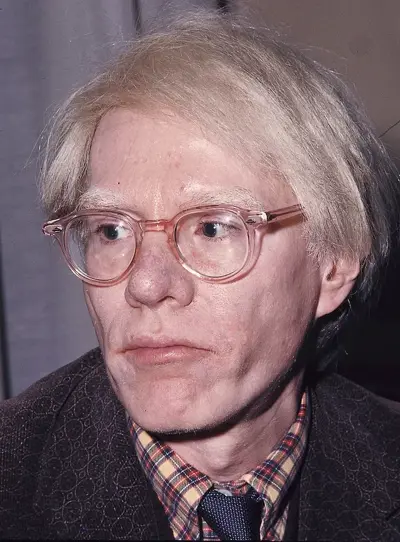
Andy Warhol was an American artist, film director, and producer who was a leading figure in the visual art movement known as pop art. His works explore the relationship between artistic expression, advertising, and celebrity culture that flourished by the 1960s, and span a variety of media, including painting, silkscreening, photography, film, and sculpture. Some of his best known works include the silkscreen paintings Campbell's Soup Cans (1962) and Marilyn Diptych (1962), the experimental films Empire (1964) and Chelsea Girls (1966), and the multimedia events known as the Exploding Plastic Inevitable (1966–67).
