Gregor Mendel Quotes
When two plants, constantly different in one or several traits, are crossed, the traits they have in common are transmitted unchanged to the hybrids and their progeny, as numerous experiments have proven; a pair of differing traits, on the other hand, are united in the hybrid to form a new trait, which usually is subject to changes in the hybrids' progeny.
Mendel, Gregor. "Versuche über Pflanzen-Hybriden." Verhandlungen des naturforschenden Vereines in Brünn, vol. 4, 1866, pp. 3-47.


Some opponents of genetic engineering and Xenotransplantation (creating new animals by combining parts of different animals or adding parts of one animal species to another) cite this Biblical passage in their efforts to stop these new technologies. Yet both are well established and most people, including the opponents often do not even realize instances of it. For example, a large proportion of heart valve repairs in humans is accomplished by Xenotransplantation—replacing the defective heart valve with a pig heart valve. An entire line of biological research is being conducted by splicing the genes of a jellyfish that glows green under UV light into monkeys and worms to study the methods of genetic transmission.


Actually, The Theory of Evolution shows no such thing. Diversity is critical for Natural Selection to function. It is the inbred Royalty of Europe that showed a propensity to various defects and abnormalities. There are millions of examples where the offspring of a couple are superior to both parents with respect to a characteristic. Some also who are inferior to both parents. Then there are some “in-between”. Traits in evolution and generics are not subject to a simple averaging.
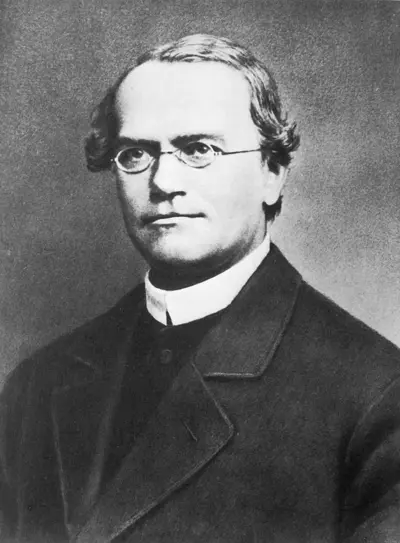
Gregor Johann Mendel was a meteorologist, mathematician, biologist, Augustinian friar and abbot of St. Thomas' Abbey in Brno, Margraviate of Moravia. Mendel was born in a German-speaking family in the Silesian part of the Austrian Empire (today's Czech Republic) and gained posthumous recognition as the founder of the modern science of genetics. Though farmers had known for millennia that crossbreeding of animals and plants could favor certain desirable traits, Mendel's pea plant experiments conducted between 1856 and 1863 established many of the rules of heredity, now referred to as the laws of Mendelian inheritance.
