Ahmed Zewail Quotes
When Mohamed Morsi was elected president of Egypt in 2012, many in the country, including me, were hopeful that he would become a democratic president for all Egyptians - not only for the Muslim Brotherhood.
Zewail, Ahmed. Reflections on World Affairs: Peace and Politics. Imperial College Press, 2015.


The Muslim Brotherhood which had been elected after the Arab Sprint deposition of President Mubarak, had then begun to institute their own religious philosophy into what was becoming a theocratic government. Rights of Christians, and other non-Muslims as well as moderate Muslims, together with women, democrats and advocates for human rights and freedom were trampled. 30 million people demonstrated in the streets and the nation was about to have a civil war when the military, under el-Sisi, deposed the Muslim Brotherhood government. When the Brotherhood took to the streets, many with weapons, there was a clash where almost 1000 Brothers were killed as were almost 100 police. The general was addressing the Egyptians and the rest of the world explaining the reason for breaking up the demonstrations.

This was a classic criticism of Barack Obama—namely that he was an intellectual who could only communicate in a rational, academic, unemotional style and was reluctant to express outrage and publicly chastise other parties or counties.

This quotation is a great demonstration of how much wiser and the better politician of all the crowned heads of Europe that Queen Victoria was. There were stirrings of freedom and desire for parliamentary government throughout Europe. Queen Victoria, even though and perhaps because she was a young woman, had a great feel for fairness and reasonableness and had read a great deal of history. There were some radical red socialists calling for complete radical revolution scaring European Royalty profoundly. They reacted very conservatively and with reaction, reverting to more tyrannical practices of the past urged in that path by very conservative, right wing advisors. Victoria also had little respect for some of the monarchs who had little interest in their people and much with their personal power and wealth. In the end, it was England which was the only nation which never had a serious radical socialist / communist threat, and that had much to do with Victoria’s political acumen and wisdom.
The election to which he referred was the 2005 election, the first free election since the Baath Party seized control of the country. Despite boycotts and threats of assassination and terrorist attacks, almost two thirds of the eligible population risked their lives and voted.


From the latter part of the 20th century onward, religious nationalism was no longer a force for most religions and nations except Muslim countries. It was the only religion left where a large proportion of the adherents saw no distinction between the religion and the government. Nations that had separation of church and state were not conducive to the extreme fundamentalist form of Islam where the Secular Leader and the Religious leader was to be embodied as a single person. As a result Islamic religious nationalists argued for a Theocracy and at times fought for it with violent means. The secular government typically, to curtail the violence and prevent a religious takeover, often outlawed the extreme religious Islamic parties. While Aslan cites the Muslim Brotherhood failure in Egypt as a desirable outcome, the only way the other forces of Egyptian society could prevent the Islamists from taking over turning the country into a theocracy was to forcefully repress the extremists. The Turkish outcome was much better, but there was the threat of repression of the Justice and Development Party when it won a majority control of the government. There were explicit threats that if it tried to weaken the secular nature of the government as Ataturk had formulated it, the military would come “out of the barracks” and oust the government as they had done before. There were nations like China which persecuted religions such as certain forms of Christianity, but those religions were not fighting for religious nationalism. They only wished the freedom to practice their religion and had no program or theology that argued for Christianizing the government. The Tamil Hindus of Sri Lanka did not want a Hindu government and were perfectly free to practice their religion. The problem was that they felt that there was systemic social and economic discrimination against the Tamils and they fought for independence—not of a Hindu state, but of a secular, nondiscriminatory state of equal opportunity.

El Baradei resigned when he made this statement. After the Arab Spring revolution, Mohammed Morsi had been elected President by a bare 51 pecent of the vote. However, he was a member of the political wing of the Muslim Brotherhood, an international terrorist organization which advocates Islamic Sharia and Theocracy. He began sizing powers and his government passed a constitution that did not guarantee basic human rights and moved towards a theocracy. Then he eliminated the checks and balances and the public finally revolted bringing 20 million Egyptians into the street in protest. A civil war was eminent and the military stepped in and forced Morsi to resign.


He was in a Turkish Prison when he made this statement. Some of his more militant PKK followers rejected the statement assuming that it was coerced. Most agreed and were tired of a fight against an overwhelmg Turhish military and police. However the PKK militsntd, devclsred terrorists by the US and many other nations, killed 40,000 Turks including many Kurds who are and have been an ethnic minority in Turkey who have been treated very badly..


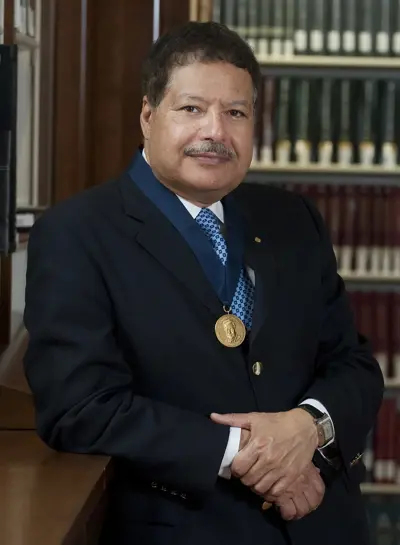
Ahmed Hassan Zewail was an Egyptian-American chemist, known as the "father of femtochemistry". He was awarded the 1999 Nobel Prize in Chemistry for his work on femtochemistry and became the first Egyptian to win a Nobel Prize in a scientific field. He was the Linus Pauling Chair Professor of Chemistry, Professor of Physics, and the director of the Physical Biology Center for Ultrafast Science and Technology at the California Institute of Technology.
