Simon Wiesenthal Quotes
When history looks back I want people to know the Nazis weren't able to kill millions of people and get away with it.
Wiesenthal, Simon. Justice Not Vengeance. Grove Weidenfeld, 1989.

He was a viscious anti-Semite who attracted to his party extreme right wingers, Nazi Sympathers and apologists for the Vichey Franch government. The party was rejected by the majority of French voters, but when his daughter took over the party, she was not an anti Semite but foudn it hard to shake the party's image which was alaysa associated with her name even when she actually kicked her father out of the party.


“Lebensraum” was a German expansionist concept of the time which has no good English translation. Literally, it means “living room”. The Germans had this notion that the German race and nation had to have more land to accommodate the growth of the German people. And because the Germans were a superior race, they were entitled to the land surrounding Germany in which to have Germans grow and thrive. The “inferior” peoples who lived on the land could be exterminated so that Germany would have this expansion room. The “Death’s Head units” were special German elite troops who used the Death’s Head as a symbol on their uniforms. Some of the Generals were concerned that the rest of the world would condemn Germany and possibly interfere if they exterminated the Poles. Hitler pointed to the example of the Turks who had killed most of the Armenians in the Armenian Genocide in the early 20th century. They got away with it with no outside interference, and there were no international consequences for Turkey. Hitler, convinced that the Armenian genocide was the precedent, thought Germany could easily get away with murdering the Gypsies, seriously handicapped, homosexuals, Russians, Poles and Jews. For other quotations on the Armenian Genocide, see {51838}, {638251}, {620602}, {620603}, {620604}, {620605}, {620600}, and {620606}

The assassination was attempted in 1944 and after its failure, he was shot be a firing squad.
The non-violent resistance tactics of the White Rose were so threatening to the Nazi German regime that Sophia and other members were executed by guillotine beheading as a particularly harsh example. The graphic is a postage stamp that Germany has issued in her honor.


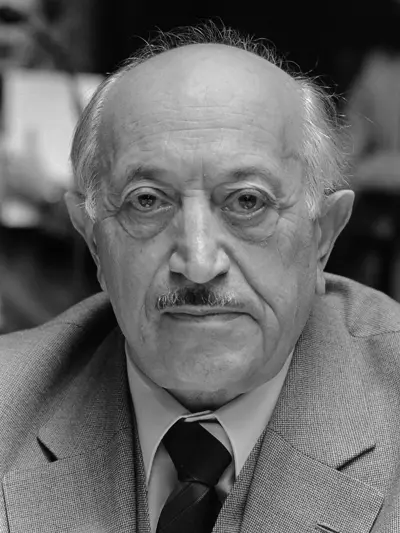
Simon Wiesenthal KBE was a Jewish Austrian Holocaust survivor, Nazi hunter, and writer. He studied architecture and was living in Lwów at the outbreak of World War II. He survived the Janowska concentration camp (late 1941 to September 1944), the Kraków-Płaszów concentration camp (September to October 1944), the Gross-Rosen concentration camp, a death march to Chemnitz, Buchenwald, and the Mauthausen-Gusen concentration camp (February to 5 May 1945).
