Herodotus Quotes
When a woman removes her garment, she also removes the respect that is hers.
Herodotus. The Histories. Translated by A. D. Godley, Harvard University Press, 1920, p. 13.


This is the famous sura that has been interpreted to require women to be covered, wear the chador or burka completely covering them or just a headscarf as other Muslims interpret it. Note that a literal reading does not require complete covering. Fundamentalists in Islam do not only rely on the precise literal statement through they would never dispute it. But many would believe that it is metaphorical for not revealing anything that might be stimulating to men. The sura goes on to list those male relatives who are exempted. These are the same as those where marriage is forbidden.

Samuel Langhorne Clemens, 1835-1910


Arguing to impeach President Thomas Jefferson:


This text, generally considered the most important of all the Hindu works is believed to be the guidance given by Lord Krishna, the most important of the God figures, to has friend and devotee Arjuna. It originally was an episode of the enormous Mahabharata, the history of the ancient world written originally in Sanskrit. The date is approximate and different scholars have dated it from 500 BC to 50 BC. The Bhagavad Gita is generally regarded as the most concise description of Hindu philosophy. For Christians this notion is not a general one although it has evolved very strongly outside of religion in some subcultures such as Spain. But for Islam and the Hindu religion this notion is an integral component of the religious philosophy.

See {583345} for the offer.

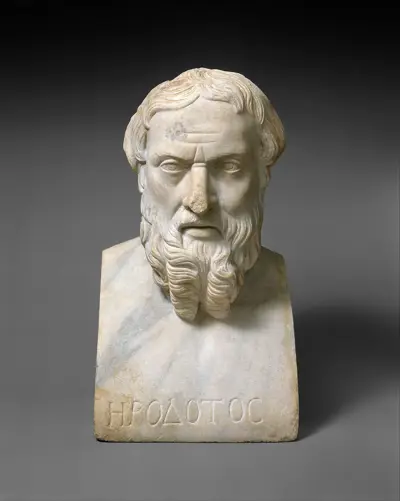
Herodotus (/hɪˈrɒdətəs/; Ancient Greek: Ἡρόδοτος, Hēródotos, Attic Greek pronunciation: [hɛː.ró.do.tos]; c. 484 – c. 425 BC) was an ancient Greek historian who was born in Halicarnassus in the Persian Empire (modern-day Bodrum, Turkey). He is known for having written the book The Histories (Ancient Greek: Ἱστορίαι Historíai), a detailed record of his "inquiry" (Ancient Greek: ἱστορία historía) on the origins of the Greco-Persian Wars. He is widely considered to have been the first writer to have treated historical subjects using a method of systematic investigation specifically, by collecting his materials and then critically arranging them into a historiographic narrative. On account of this, he is often referred to as "The Father of History," a title first conferred on him by the first-century BC Roman orator Cicero.
