Kathleen Troia McFarland Quotes
Whatever the final outcome in Iraq, our men and women in uniform should stand tall with pride for a job well done. It was our political leaders - of both parties and both presidencies - who failed us.
McFarland, Kathleen Troia. "Who Lost Iraq? Bush or Obama?" Fox News, Fox News Network, 13 June 2014.


Podharetz was citing the Vietnam war. The two American occasions where the plausibility seemed to fade were the Vietnam War and The Irag war. Both Presidents Lyndon Baines Johnson and George W. Bush as Bismarck predicted, had much political trouble over the wars.


At the time, our culture was much more “macho” than it is today. Men who strongly advocated peace risked being perceived as not masculine enough. Theodore Roosevelt was the cultural icon of the day as John Wayne would come to be later.


Bush assumes that this meant that all the people agreed with his decision to invade Iraq. While that might have been the case, there are other possibilities that many historians, journalists and other analysts have suggested. The Vice President, and his personal staff, were known to have visited them all and lobbied for the invasion. They pressured several of them who may have not wanted to run afoul of what seemed to be the most powerful vice president in American History. Or they may have thought that the decision had already been made, and it was time to join together and loyally support the policy decision that had been made. There were few strong independent thinkers in the top tier as Bush was not intellectually or emotionally inclined to have open staff arguments to work out a policy or very strong advisors with different points of view. The strongest of the advisors like Secretary of State Colin Powell had been lied to and persuaded there was “clear evidence” that Iraq was about to deploy a nuclear weapon. This made Powell an advocate. The intelligence given to Powell and the others was wrong and much was fabricated or obtained from an unreliable source who had been pushed as trustworthy by the Vice President. The CIA Director, had told those all that the evidence and case for the fact that Iraq was developing and close to deploying a nuclear weapon was a “slam dunk”.

1st Earl Baldwin of Bewdley. Though members of the same Conservative Party, Churchill was a major opponent of Baldwin’s peace and “appeasement” efforts and publicly castigated Prime Minister Baldwin. Yet Baldwin, if he could not stave off war, wanted his critic to serve as Prime Minister if war was inevitable. Churchill never had much respect for Baldwin. See {626930}.

The English were at War with Napoleon and Denmark was neutral. British leaders feared that Denmark might either ally themselves with Napoleon or provide him with ships from their well equipped fleet. The English decided on a preemptive attack on Denmark and military forces were ordered to Denmark. When they arrived, they were ordered to bombard Copenhagen and force the Danes to surrender. When this happened, the British seized the Danish ships and simply took them as war prizes. The issues of the morality and wisdom of preemptive attacks, as with the Americans in the Iraq war, was thoroughly debated but the government view prevailed to the shame of most Englishmen.


Galloway, a witness before the committee who had always criticized the American and British Policy of Iraq invasion to eliminate weapons of mass destruction, had also predicted the insurrection and resistance to the American and British occupation had been attacked by Coleman for taking campaign contributions from British Islamic terrorists—see {616260}. Coleman expected the typical American hearing behavior where Senators can berate witnesses who generally behave docilely in defending themselves. He was not used to the English style of political debate which is much more aggressive and Colemen was nonplussed when Galloway came up with this put down.
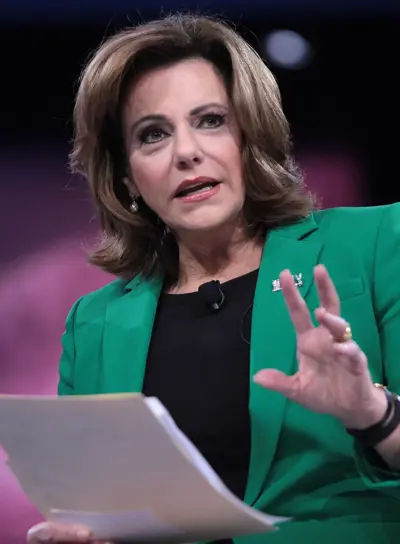
Kathleen Troia "K. T." McFarland is an American political candidate, former government official, and political commentator. She served as Deputy National Security Advisor under Michael Flynn for the first four months of the Trump administration. She was asked to step down by Flynn's successor H. R. McMaster; news of her pending nomination as U.S. Ambassador to Singapore was reported at the same time. President Trump nominated her in May 2017; she withdrew it in February 2018 due to concerns around her answers related to links between Trump associates and Russian officials, in particular about discussions between Flynn and Russian ambassador Sergey Kislyak.
