E. Howard Hunt Quotes
What we wanted to do was have a terror campaign to terrify Arbenz particularly to terrify his troops, much as the German Stuka bombers terrified the population of Holland at the onset of World War II.
Jacobo Arbenz, 1915-1971, was the President of Guatemala who the Central Intelligence Agency ousted by organizing a coup and providing a CIA airplane to terrify and intimidate Arbenz’s loyal soldiers. Guatemala had never been bombed before and the low flying planes had the desired effect. This quotation is important because it shows that the United States engaged in some terrorism and some officials actually used the term “terror” in describing one of our activities.
E. Howard Hunt, 1916-2007, Special Assistant to the President, CIA Agent, Member of "The Plumbers" and Watergate burglar Explanation of why the 1954 Central Intelligence Agency had an airplane buzz the Guatemalan Presidential Palace and drop leaflets calling for regime change
Sourced by: Eigen's Political and Historical Quotations


Neilson had flown in the Doolittle Raid on Tokyo. It was the first bombing of Tokyo in WWII. He was shot down and captured. He was tortured including the torture of ‘waterboarding.’ The Japanese who administered the torture and who allowed it were tried before the International Military Tribunal for the Far East—the Tokyo War Crime Trials. They were convicted and punished. In the first decade of the 21st century the George W, Bush Administration argued that waterboarding was not necessarily torture despite the fact that Americans had tried and punished foreigners who engaged in the practice and even Americans who did. It was completely outlawed by military regulations but some Americans felt that it should be allowed by the CIA in dealing with terrorists.


Von Richthofen, cousin of the “Red Baron,” was justifying tactics that the Germans tried out in Spain before the Second World War—specifically the complete obliteration of Guernica by bombing and strafing although there were no military targets in the city. Guernica was the first city ever completely destroyed by aerial bombardment. The atrocity inspired Picasso’s great paining of that name.


60,000 English men, women, and children had been killed by German terror bombing of London and other English cities. The policy had been to retaliate and bomb German population centers. Over 4 million British homes had been destroyed by the blitz and Churchill was becoming concerned that when the Allies would occupy Germany shortly, there would be no German housing left for the civilian population much less for the Allied occupying forces. Churchill’s Air Attaché persuaded him NOT to send the memorandum with it’s references to the terror bombing in retaliation. The memorandum was rewritten with the references to “terror” removed. The bombing of cities did stop as a result.


of the German tactics of Blitzkrieg Goering, Hitler and the other leading Nazis were quite open about their military aggression. Terrorism was admittedly used to persuade the next nation Germany would attack to capitulate rapidly.


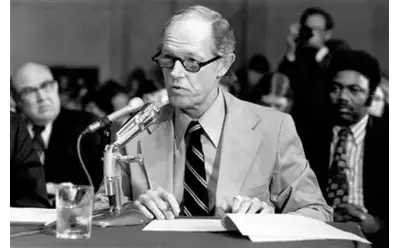
Everette Howard Hunt Jr. was an American intelligence officer and author. From 1949 to 1970, Hunt served as an officer in the Central Intelligence Agency (CIA), particularly in the United States involvement in regime change in Latin America including the 1954 Guatemalan coup d'état and the 1961 Bay of Pigs invasion. Along with G. Gordon Liddy, Frank Sturgis, and others, Hunt was one of the Nixon administration "plumbers", a team of operatives charged with identifying government sources of national security information "leaks" to outside parties. Hunt and Liddy plotted the Watergate burglaries and other clandestine operations for the Nixon administration. In the ensuing Watergate scandal, Hunt was convicted of burglary, conspiracy, and wiretapping, eventually serving 33 months in prison. After release, Hunt lived in Mexico and then Florida until his death.
