Deborah Sampson Quotes
What shall I say further? Shall I not stop short and leave to your imaginations to portray the tragic deeds of war? Is it not enough that I here leave it even to unexperience to fancy the hardships, the anxieties, the dangers, even of the best life of a soldier?
Gannett, Deborah Sampson. An Address, Delivered with Applause, at the Federal-Street Theatre, Boston. H. Mann, 1802, p. 17.


An example of this was the landing in the beaches of Normandy in WWII. Once on the beaches the allied troops had to win or die. Some of the most heroic fighting in American and English military history occurred on those beaches. Another was the Spanish Explorer Hernando Cortez who after landing in the New World, had his ships burned so that he and his soldiers had to conquer or they would die.


Drumbo was morally opposed to war. He also refused to name Hollywood communists to Congressional Committees during the Red Scare. He was then blacklisted from his occupation, screen writing.


Nearly two years after Tripoli had declared war against the United States, the U.S., after much deliberation, decided to stop negotiating a tribute settlement with Tripoli. The U.S. launched their attack on June 11, 1803 in what would be the first amphibious operation on the Barbary Coast. After witnessing the operation, the Pasha was unmoved. Piracy and war was a way of life for the Barbary states.


At the height of his professional career, this Hall of Famer enlisted in the WWII Navy and was an anti-aircraft gunner and fought in the Pacific.


This line was used in the WPA Federal Theater Project. The play was closed down, because the State Department was distressed that the Federal Theater quoting heads of State might be insulting to the world leaders. Mussolini was another character in the play and he was depicted as the boorish thug that he turned out to be. It was that which offended the government officials who closed the show before it could open. FDR used a similar line 6 years later. See {32529} . Dolores Ibarruri in the Spanish Civil War is quoted with a similar phrase at about the same time. See {604321}


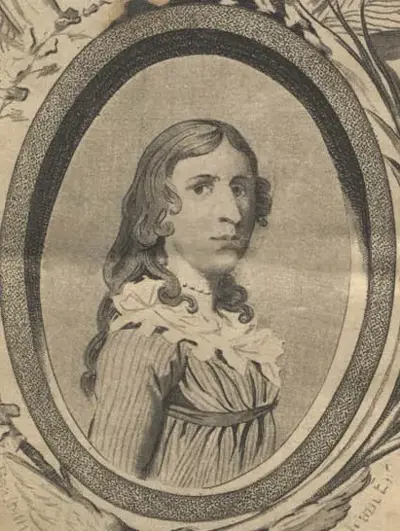
Deborah Sampson Gannett, better known as Deborah Sampson, was a Massachusetts woman who disguised herself as a man in order to serve in the Continental Army during the American Revolutionary War. She is one of a small number of women with a documented record of military combat experience in that war. She served 17 months in the army under the name "Robert Shirtliff" (also spelled in various sources as Shirtliffe and Shurtleff) of Uxbridge, Massachusetts, was wounded in 1782, and was honorably discharged at West Point, New York in 1783.
