Aldo Leopold Quotes
What more delightful avocation than to take a piece of land and by cautious experimentation to prove how it works. What more substantial service to conservation than to practice it on one's own land?
Leopold, Aldo. "The Farmer as a Conservationist." American Forests, vol. 45, no. 6, 1939, p. 298.


The emergency was what was called the “Dust Bow” which was a period of severe dust storms causing major ecological and agricultural damage to American and Canadian prairie lands in the 1930s. Over 350,000 people left the Great Plains. The phenomenon was caused by severe drought combined with a failure to apply dry land farming methods to prevent wind erosion. What makes this quotation important is that it illustrates a remarkable practice of Mrs. Roosevelt that no other first lady as every done. Here the First Lady of a sitting President was overtly whipping up public opinion to complain that the government, led by her husband, was doing nothing to cope with a national emergency. This was very common and Mrs. Roosevelt was way out ahead of the President and his administration on most issues of the day. The President seemed to like the idea and it may have been one of the great public strategies of a Presidency. The First Lady would publicly advocate major reforms. The President could then observe the public reaction, judge the newspaper and pundit pronouncements, see how different special interests reacted. Then he could decide to embrace the reform or ignore it saying that it was just the opinion of his very independent wife. FDR had a very strong ego and had no problem with his wife publicly criticizing him.

Withdrawal meant not allowing certain public land to be sold or allotted to homesteading, commercial development, mining, industrial, ranching, or agricultural use. It was reserved as wilderness areas and/or national parks or forests.


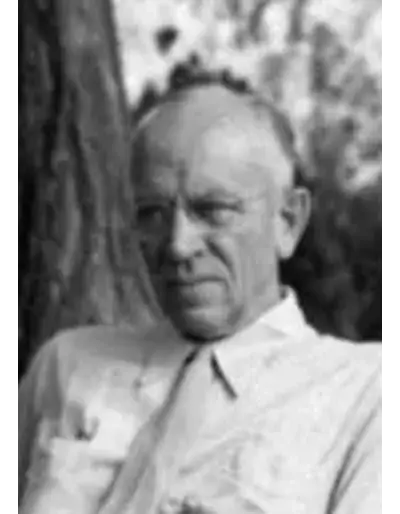
Aldo Leopold was an American author, philosopher, naturalist, scientist, ecologist, forester, conservationist, and environmentalist. He was a professor at the University of Wisconsin and is best known for his book A Sand County Almanac (1949), which has sold more than two million copies.
