Gianni Agnelli Quotes
Well, the Communists at that moment were very strong in Italy and the Italian Communist Party was the biggest Communist Party outside Soviet Union, there's no doubt about that.
Agnelli, Gianni. Interview. Cold War, episode 3, "Marshall Plan, 1947-1952", CNN, 11 Oct. 1998.


This was only 6 years after the Russian Revolution. Communist Russia had extended its influence to much of the world without firing a shot. To many, communism looked like the future. The Russian inability to make communism work economically in the next 70 years destroyed most of its influence.


This is an example of what made the Cold War so difficult. The Italian Communists had great misgivings about the Russian version of Communism that tended to abuse human rights and try and control other countries. However, when the Russian Communists were under world attacks by the West, as with their incursion into Hungary, he urged that all the Communists stick together and defend the Russians even for policies that they thought wrong. On the West side, the same thing occurred. The United States tolerated and supported a number of terribly oppressive dictatorships that were virulently anti-Communist. Polarization was the international norm.

After the 1917 Russian Revolution many of the Western Countries sent troops to Russia where they aided the Whites against the Reds. When the Red Bolsheviks prevailed, there were many attempts to diplomatically and economically undermine the Communist government. This caused a unity among different Russian factions. Sforza urged leaving them alone and letting the Bolsheviks fail by their own ideology. Most Western nations and the United States did not agree with him.


Advocating a revolution against the Karenski provisional government: Vladimir Lenin

This was the basic document issued after the Russian Revolution establishing the basic legal and economic structure of the new Soviet State.


So many Afghans thought very differently and resisted Amin’s Government and the Russians, that the Russians pulled out of Afghanistan.

Many Americans were paranoid about Democratic Socialism being a stalking horse or front organization for Communists. Similarly, many Socialists were paranoid that the American and European (and other) capitalists were out to destroy them in their conflation of socialism and communism.

The “October Revolution” was the Russian Revolution of 1917.
Only 6 years after the Russian Revolution Lenin was already being perceived as an international provocateur and instigator of problems.

According to Palmer, all labor strikes were a part of the international communist movement to take over America. This quotation is an excellent example of the conflation and the strange logic of the extreme anti-communists of the red scare. It started with a railroad strike. Because some of the strike leaders were socialists and some communists, the strike was communist. And if it was communist, the strike is but one step in capturing the political and economic power of the nation, and the purpose of that was to overthrow the government and substitute the governmental structure of Russia. With such thinking no labor action could be seen as American and patriotic if there were any socialists or communists participating in the strike. Later in the McCarthy era, a strike would be a menace if any participant even had been a communist or was related to one or had friends who were communists or even if not but the Communists morally supported the strikers, then the strike was dangerous. The same thing for civil rights. The Communists loudly opposed racial segregation. Therefore any effort to end segregation was a danger to America and furthers the communist conspiracy. This “logic” can be seen well into the 1960’s by the Southern segregationist leaders.

See the Related Quotation for a good contemporary example of the clerics whop were party tools.


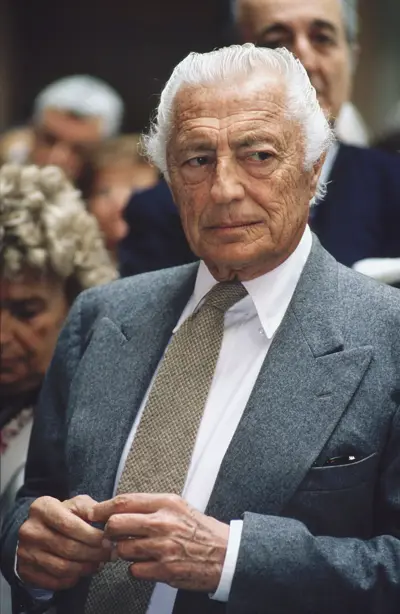
Agnelli was educated at Pinerolo Cavalry Academy, and studied law at the University of Turin, although he never practiced law. He joined a tank regiment in June 1940 when Italy entered World War II on the side of the Axis powers. He fought on the Eastern Front, being wounded twice. He also served in a Fiat-built armoured-car division in North Africa, where he was shot in the arm by a German officer during a bar fight over a woman. After Italy surrendered, due to his fluency in English, Agnelli became a liaison officer with the occupying American troops. His grandfather, who had manufactured vehicles for the Axis powers during the war, was forced to retire from Fiat, but named Valletta to be his successor. Gianni's grandfather died, leaving Gianni head of the family but Valletta running the company. Fiat then began producing Italy's first inexpensive mass-produced car.
