Akhtar Mohammad Mansour Quotes
We will continue our jihad until the creation of an Islamic System. The enemy with their talk of peace is trying by this propaganda to weaken the Jihad.
Akhtar Mohammad Mansour, Deputy Taliban Commander of Afghanistan, Islamic Mullah, Statement at the announcement that Mullah Omar, the Director had passed away, August 1, 2015
Sourced by: Eigen's Political and Historical Quotations


“Martyrdom” is the euphemism that fundamentalist Muslims use to denote being killed while “fighting for Islam” or on a suicide mission for same. Many believe that such people ascend directly to Paradise where they are given a bevy of virgins and other “perks.” Ironically, this was the last interview that he gave before he himself was “martyred”—he was killed by coalition troops. This mental perspective is one of the reasons that fighting fundamentalist Islamic terrorists is so difficult. They perceive victory whichever way the battle or even the war comes out.

He was the first American that who was assassinated by the Central Intelligence Agency by means of a drone attack. He was a major recruiter for Al Qaeda and he preached to 3 of the 9-11 terrorists.


Slogans taken from posters listing 10 people targeted by Muslim extremists. Most were people who had said or published material that some fundamentalist Muslims had decided were offensive to Islam. One was Charlie Hebdo, the French Publisher who Islamic terrorists murdered later. Note the Americanisms that the terrorist propagandists adopted. The Wanted Dead or Alive was taken from the posters of the American West of the 19th century. The "Yes we can" was lifted from the Barack Obama 2008 campaign slogan. The "Bullet A Day Keeps the Infidel Away" is a takeoff on the American saying "An apple a day keeps the Doctor away." One of the reasons for these Americanisms was that the founding editor was Samir Khan, self-described American traitor.

Most Islamic fundamentalists oppose the education of girls. Malala Yousafzai as a teen ager spoke out encouraging girls to go to school. This offended some of the Taliban fundamentalist terrorist, who threatened her if she continued to speak out. When she continued, they tried to murder her. They shot her in the head, but she was airlifted for medical treatment and survived. She was the winner of the European Sakharov Prize for Freedom of Thought and nominated for the Nobel Prize.


See {586916} for a passage from the Koran supporting his point.

See {583817} for how France was more assertive in handling this problem.


The column was written in the immediate aftermath of the terrorist murder of hundreds of school children and adults in Russia. The newspaper was the largest Arab newspaper in the world.


The health infrastructure of Nigeria was up to the job of containing the Ebola epidemic of 2014, but the police and military, notoriously corrupt, had not joined their services to fight and risk their lives, and would not do so, thus allowing Boko Haram, a radical Islamic terrorist group to thrive in the North of the country where there was a large Muslim population. Finally, in 2015 the government moved against Boko Haram but only with partial success.
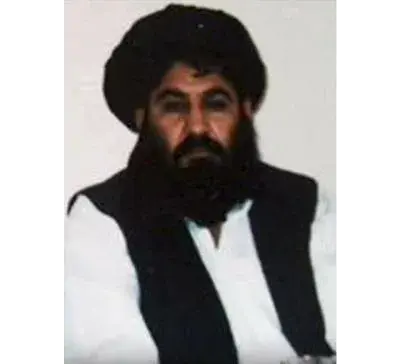
Mullah Akhtar Mohammad Mansour was the leader of the Taliban, an Islamic fundamentalist political movement in Afghanistan, from 29 July 2015 to 21 May 2016, when Mansour was killed in a drone strike by the United States in Pakistan.
