Jonas Salk Quotes
We were told in one lecture that it was possible to immunize against diphtheria and tetanus by the use of chemically treated toxins, or toxoids. And the following lecture, we were told that for immunization against a virus disease, you have to experience the infection, and that you could not induce immunity with the so-called "killed" or inactivated, chemically treated virus preparation. Well, somehow, that struck me. What struck me was that both statements couldn't be true.
This quotation is important because it illustrates a problem in medical education and science in general that inhibits development and advancement in the field. The existing belief of most people in the field may not only be wrong, but as in this case, it had to be wrong as both of the statements could not be true at the same time as they contradicted each other. Most researchers were stuck with the “killed virus” development. Salk just assumed that what he was being taught was wrong, and proceeded with his research ignoring the best thinking on the subject and finally developing a “live virus” that worked when others claimed it was impossible and some refused to believe it even after it was demonstrated to be working well. Scientists, like everyone else, must be careful not to have their thinking limited by what the experts of the time think that they know.
Jonas Salk, 1914–1995, Physician, Medical Research & Inventor of the first Polio Vaccine, Founder of The Salk Institute for Biological Studies, Description of part of his medical education, Interview with Richard D. Heffner on The Open Mind, May 11, 1985
Sourced by: Eigen's Political and Historical Quotations


This is an amazing quotation and shows that the Ancient Romans who had a very sophisticated medical technology had a notion of germs and microbes. Ancient Rome was the first organized nation for which health, medicine, public health, and medical research were governmental functions unlike Greece and other civilizations where health was a personal function. Roman policy emphasized prevention unlike the Greeks. Sanitation and water supply and quality were government responsibilities and the Roman standard was not reached in the rest of the world until the 18th century. Heath and medicine was also a major military responsibility. The Roman Empire depended on its army, and trained professional soldiers. Disease was a greater risk to the soldiers than were battlefield casualties, and the Romans had a strong vested interest in keeping these highly trained men alive and healthy—not just the wealthy Roman citizens. The Romans were open to techniques that were developed throughout the Empire and beyond and tended to adopt all good ideas and a few bad ones as well While they had advanced surgery, the public health was the strongest aspect of Roman medicine and health and this notion of germs and disease. Remember that the writer was not a medical or scientific man, but was just indicating what was general wisdom of the Roman elite.


The CDC scientists track communicable diseases and are responsible for creating vaccines each year in time to limit the “flu season’ and other disease mortality and morbidity. In the government shutdown, they could not even volunteer to work in their own laboratories.


Bush had advised FDR to go ahead with the research and development program to try and develop an atomic bomb. He was the only Government Official who Roosevelt discussed the idea with. At the time, Bush as a government official supervised and directed many thousands of scientists, and was one of just a few scientists who monitored and advised on the Manhattan Project to develop the Bomb.


He is in charge of collecting and deploying the funds donated for infectious diseases from countries throughout the world. Each nation has its own budget cycle and the public health officials have to plan and act as soon as they learn that an epidemic is breaking out. The viruses and bacteria grow when they grow, not when budgets have planned for them.
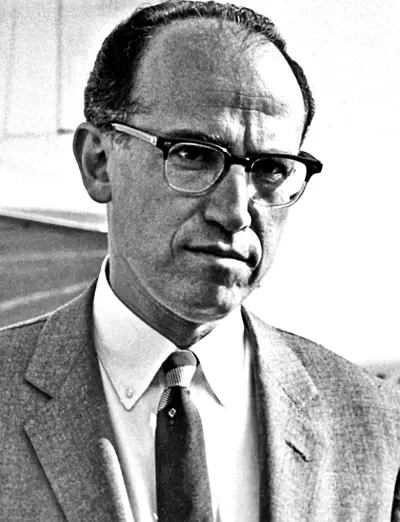
Jonas Edward Salk was an American virologist and medical researcher who developed one of the first successful polio vaccines. He was born in New York City and attended the City College of New York and New York University School of Medicine.
